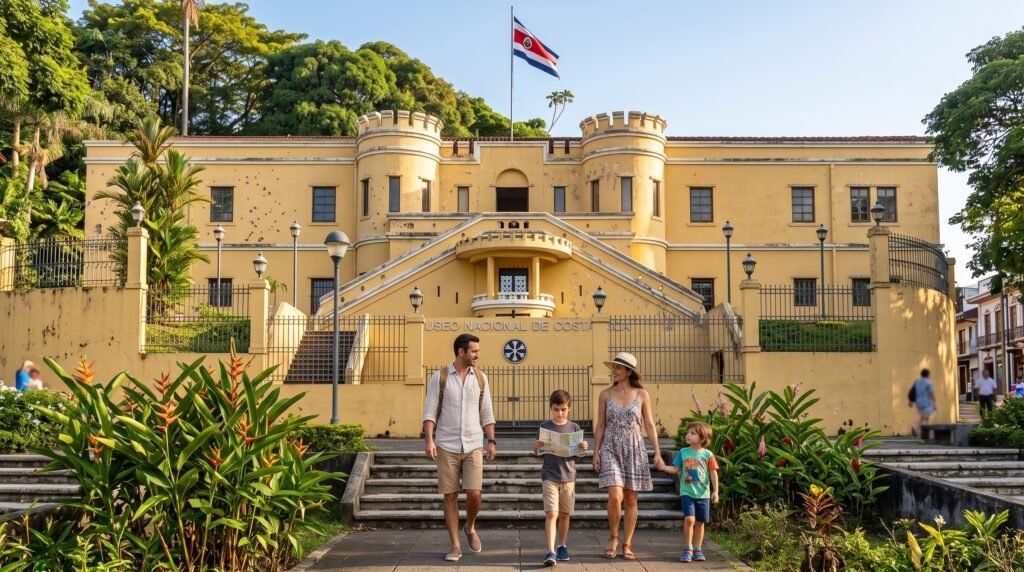
On December 1, 1948, a Costa Rican president named José Figueres Ferrero walked into the Bellavista Fortress in San José, took the keys to the building from a military officer and handed them to the Minister of Public Education. It was a theatrical gesture, carefully staged, but the thing it announced was completely real. Costa Rica was abolishing its army. Not reducing it, not reorganizing it under a different name, but eliminating it entirely and writing the prohibition into the new national constitution. The soldiers who had occupied that fortress would be replaced, eventually, by museum curators. The Bellavista Fortress became the Museo Nacional de Costa Rica, and it remains there today, its bullet-scarred walls still visible from the street, holding pre-Columbian artifacts and natural history collections instead of weapons.
The decision came at the end of a civil war that had lasted forty-four days. Costa Rica in 1948 was a politically fractured country, and the conflict that briefly tore it apart left a sizable number of people dead and the institutional trust between citizens and the state badly damaged. Figueres, who had won that war and now controlled the transitional government, drew a conclusion that was either obvious or radical depending on your starting position: the military was not protecting Costa Rican democracy; it was the primary threat to it. Eliminating the army was, in his reading, the only way to prevent the next strongman from using it to seize power the way armies in neighboring countries already had.
Article 12 of the Costa Rican Constitution, ratified in 1949, states the prohibition plainly. The army as a permanent institution is proscribed. The wording matters: permanent institution. Costa Rica maintains a national police force, border patrol units and coast guard capacity. What it does not have is a standing army that trains for war, builds weapons stockpiles or projects military force beyond its borders. The distinction sounds technical until you look at what the country did with the money it stopped spending on soldiers.
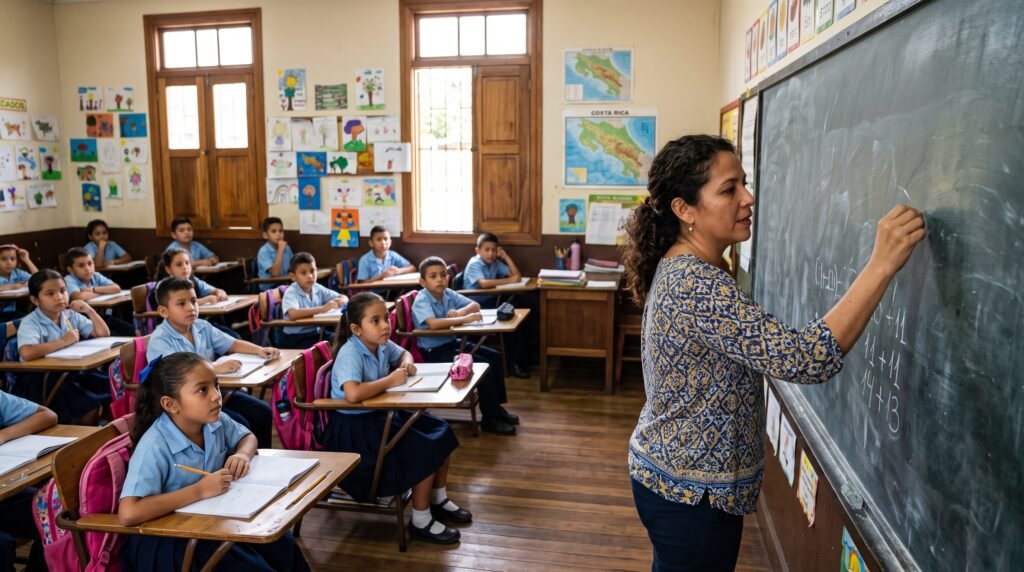
The military budget was redirected toward education and healthcare, and the effects accumulated across decades. Costa Rica today spends roughly eight percent of its gross domestic product on public education, one of the highest proportions in Latin America and comparable to several European countries with far larger economies. The national literacy rate has held above ninety-five percent for years. The public healthcare system, known as the Caja Costarricense de Seguro Social, covers the entire population regardless of employment status and has produced life expectancy numbers, currently around eighty years, that rival those of the United States despite a fraction of the per-capita income. These are not coincidental outcomes. They are the accumulated interest on a decision made in 1948 to stop funding the machinery of war and start funding the machinery of a livable society.
What is easy to underestimate is how unusual this was in its regional context. The decades that followed 1948 in Central America were, by any measure, catastrophic in terms of political violence. Guatemala, El Salvador, Nicaragua and Honduras all experienced military coups, civil wars, death squads and political repression of a scale that fundamentally shaped what those countries became. Costa Rica sat in the middle of this geography, bordered by Nicaragua on the north and Panama on the south, and managed to avoid almost all of it. Not because it was isolated from the pressures that produced violence elsewhere, but because it had deliberately removed the institutional structure through which political violence usually flows.
This is the part that visitors often find hardest to absorb. Costa Rica is a small country with no military and no history of using force to resolve political disputes for over seventy years, and it has remained stable while the region around it burned. The usual logic, that nations need armies to protect themselves, runs so deep that its absence feels like a missing piece. But Costa Rica’s stability did not come from deterrence. It came from something more durable: a political culture that had decided, and kept on deciding, that the resources required to maintain a military were better spent on the people those resources were supposedly protecting.
In 1983, Costa Rica formalized this further by declaring itself permanently neutral, meaning it would not take sides in international military conflicts and would not allow its territory to be used as a staging ground for armed operations by foreign powers. The declaration was partly a response to the war in Nicaragua, which was generating real pressure on Costa Rica’s northern border, and partly a reiteration of what the country had been practicing for thirty-five years already. Permanent neutrality gave the position an international legal character and a name, but it did not change what was already happening on the ground.
For tourists, the absence of a military is one of those background facts that shapes the experience of a country without ever appearing directly in it. There are no military checkpoints on the roads, no uniformed soldiers at public events, no visible armed presence in the normal rhythm of daily life beyond the occasional police officer near a bank or a government building. The security apparatus that does exist, the Fuerza Pública, presents itself more as a civil institution than a paramilitary one. This creates a particular texture to public space that visitors from countries with heavy military presences often notice without being able to immediately name: a kind of lowered ambient tension, a sense that the state is not primarily organized around the possibility of internal or external violence.
It also shaped something harder to measure but easy to feel. Costa Rican national identity does not run through military history the way it does in most countries. There are no celebrated battles in the public consciousness, no generals on the currency who won wars, no culture of military service as a rite of passage. The national heroes tend to be teachers, doctors, farmers and, occasionally, politicians who built something rather than destroyed it. Juan Santamaría, the one military figure who does appear in the national story, is a drummer boy from the 1856 Battle of Rivas against William Walker’s filibusters; he is remembered less as a soldier than as a young working-class kid who did something brave and died for it. Even the exception confirms the pattern.
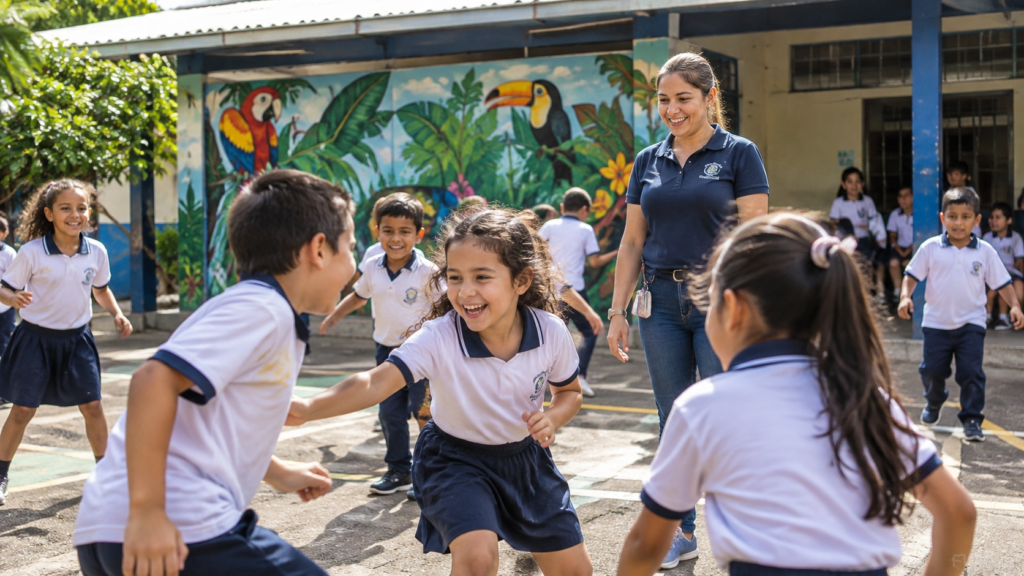
None of this means Costa Rica is without problems, inequality, corruption or the social tensions that come with rapid development and mass tourism. But the particular shape of the country’s problems does not include the ones that armed institutions create and sustain. The money that would have built barracks and bought weapons went somewhere else, and seventy-six years later, that redirection is visible in the schools, the clinics, the life expectancy numbers and the quiet, unremarkable stability of a country that decided once, a long time ago, that peace was worth spending on.
Related Topics
Why Costa Rica Has One of the Happiest Cultures in the World
What Is Pura Vida? The Real Meaning Behind Costa Rica’s Most Famous Phrase
Why Are Costa Ricans So Friendly? The Cultural Reasons Behind the Warmth