
Costa Rica presents itself to the world with a reputation for warmth, openness and that nearly untranslatable phrase pura vida, which suggests a country where everything is easy and everyone is welcome. That reputation is largely accurate, but it can create a false impression that social behavior in Costa Rica has no edges, no limits and no unwritten rules that matter. Every culture has things it considers rude, disrespectful or simply out of place, and Costa Rica is no different. Visitors who arrive assuming that friendliness means anything goes tend to discover those limits through awkward moments that could have been avoided.
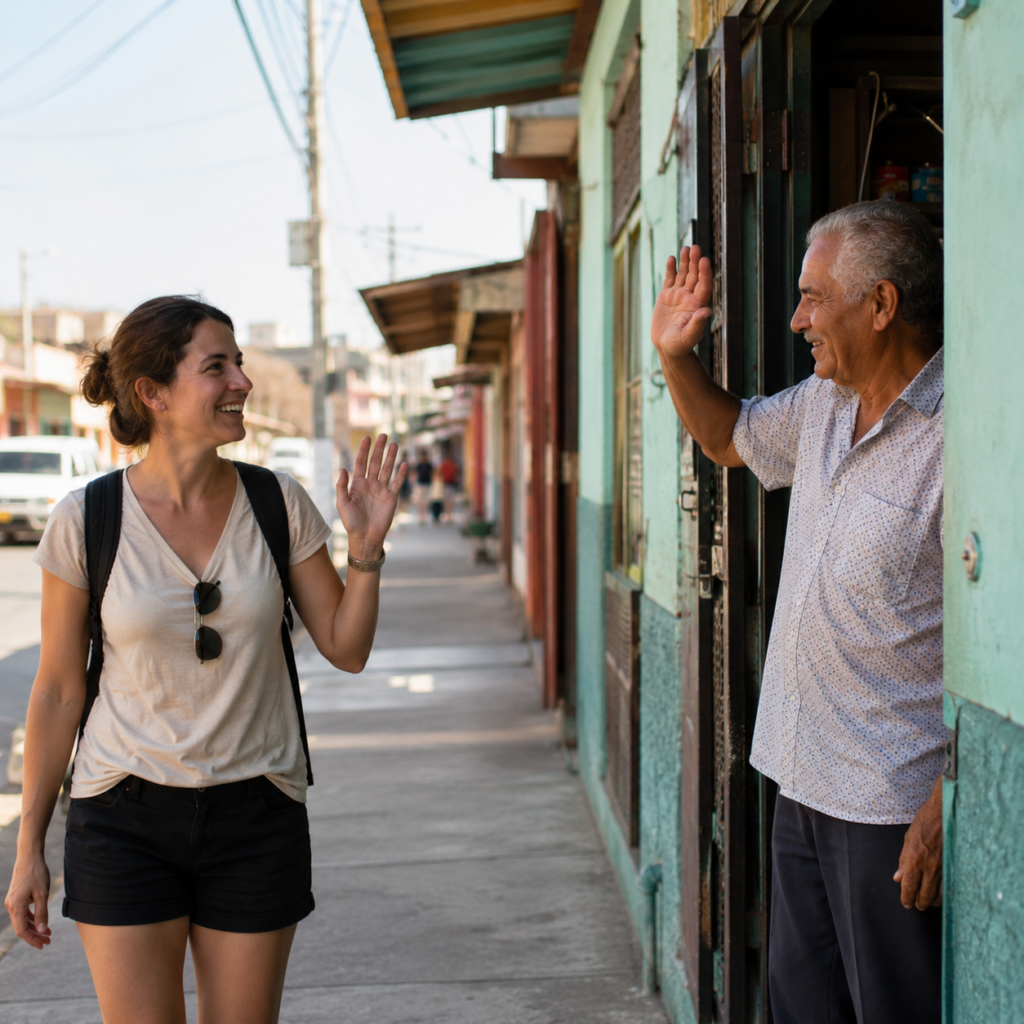
The most immediate and universally recognized social offense in Costa Rica is failing to greet people. In a country where saying buenos días to a stranger on the street is standard practice, walking past someone without any acknowledgment is not perceived as neutral; it is perceived as dismissive and cold. This applies in shops, offices, restaurants and even on walking trails. The expectation to greet is so deeply embedded that locals will often greet a room full of strangers upon entering it. Visitors who come from cultures where silence with strangers is the default will need to adjust quickly, because locals notice the absence of a greeting far more than most tourists expect.
Pointing directly at a person with the index finger is considered impolite in Costa Rica, as it is in many Latin American cultures. Locals typically indicate direction or draw attention to something by pursing their lips and gesturing with them, a subtle motion that visitors frequently miss at first but which is unmistakably clear once you know what to look for. Pointing at a person to identify them in a group or to call them out across a room is particularly rude and should be avoided entirely.
Overt displays of impatience are another reliable way to create friction. Costa Rican service culture operates at its own rhythm, and expressing frustration about the pace of a restaurant, a government office or a repair shop is considered disrespectful rather than assertive. Tapping a finger on the counter, sighing loudly or making pointed comments about how long something is taking will almost never speed things up and will often make the interaction worse. The local understanding of time is not laziness; it is a different hierarchy of values, one that places quality of interaction above speed of transaction.
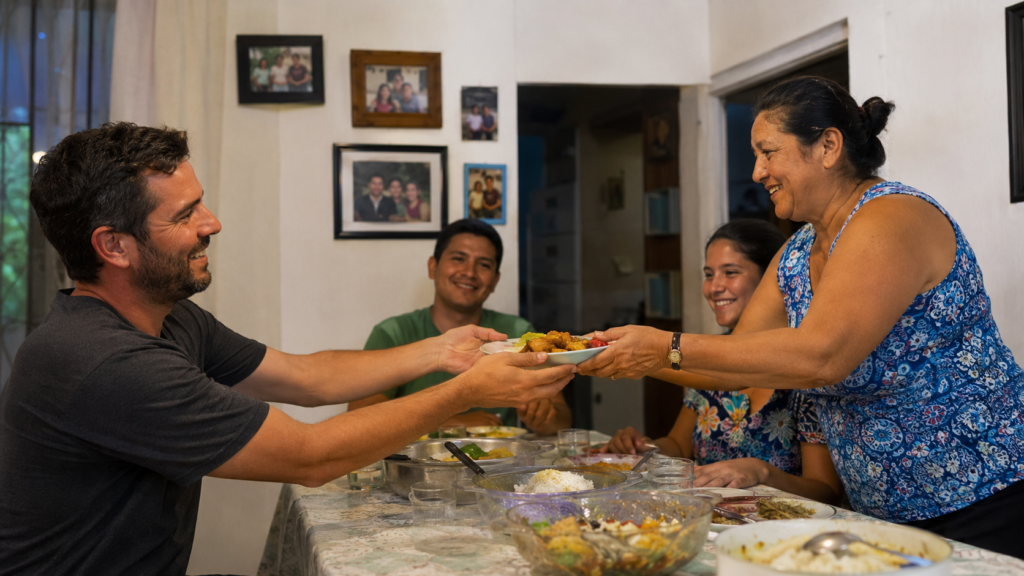
Refusing food or drink when offered inside someone’s home is one of the more serious social missteps a visitor can make. Hospitality in Costa Rica is expressed through food, and a host offering something to eat or a cup of café chorreado is extending a form of trust and warmth. Declining without a clear reason, or simply waving it off without acknowledging the gesture, is interpreted as a rejection of the host rather than the food. Accepting even a small amount, or at minimum thanking the host sincerely and explaining a dietary reason, is the respectful response.
Public arguments and raised voices are strongly frowned upon. Costa Rican culture places enormous value on social harmony, and confrontation in public spaces, even between two people who have a legitimate disagreement, makes bystanders uncomfortable and reflects badly on everyone involved. This does not mean that Costa Ricans do not have conflicts; it means those conflicts are handled in ways that preserve the surface appearance of calm. A visitor who raises their voice at a service provider, argues loudly with a partner in a restaurant or becomes aggressive in any public setting will be met with visible discomfort and quiet withdrawal from locals nearby.
Discussing personal income, asking what someone earns or making comparative statements about wealth in conversation is considered intrusive and tactless. Costa Rica has significant economic inequality and a strong cultural preference for not making those disparities visible in casual social interaction. Asking someone how much their house cost, what their salary is or making comments about the price of things in ways that imply comparison between what a visitor earns and what a local earns is perceived as insensitive at best and arrogant at worst.
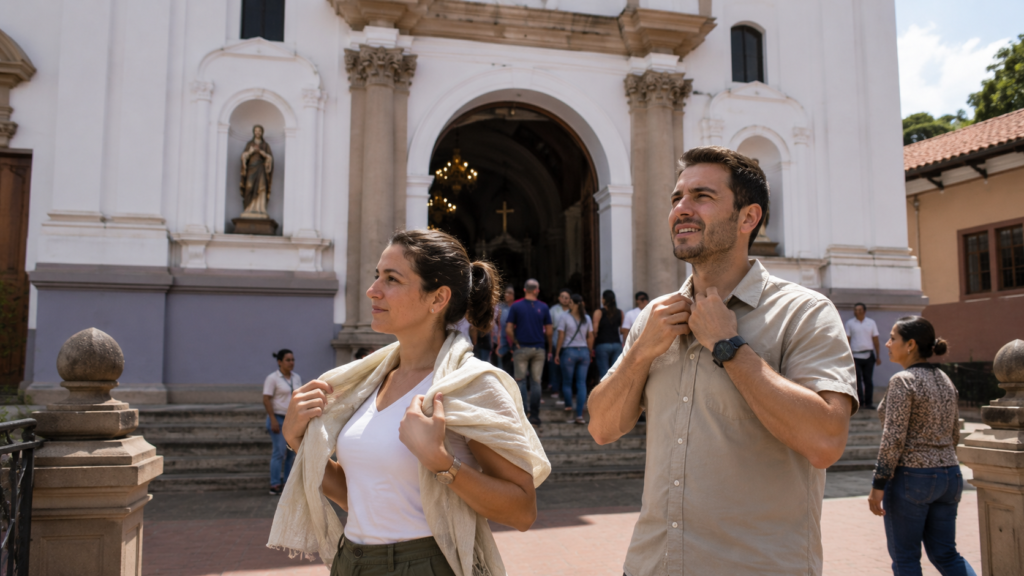
Dress code matters more than many visitors anticipate, particularly in two specific contexts: churches and small rural towns. Entering a church in beachwear, short shorts or a tank top is considered disrespectful regardless of whether a service is in progress. Many churches in popular tourist areas have begun posting signs at the door asking for appropriate dress, which is itself a sign that the problem has become common enough to require a reminder. Similarly, walking through the main street of a small inland town in the same attire that would be normal at a beach resort draws uncomfortable attention and is interpreted as a lack of consideration for local norms.
Touching produce at a market or food stall without buying it is another habit that creates friction, particularly in traditional ferias and neighborhood markets where vendors are selling goods they often grew or prepared themselves. The expectation is that a buyer handles produce to inspect it only when seriously considering a purchase, not as a way of browsing. Picking up multiple items, squeezing them and putting them back without buying anything is noticed and quietly resented.
Environmental carelessness is taken seriously in a country that has built much of its identity around conservation. Littering in nature reserves, on beaches or along trails triggers genuine disapproval from locals, not just from other environmentally conscious tourists. Feeding wildlife, leaving trash near campsites, picking flowers or disturbing animals in their habitat are all behaviors that locals will sometimes address directly, which in Costa Rica, given the cultural preference for avoiding confrontation, is a meaningful indication of how seriously the matter is taken.
Photography etiquette is another area where visitors regularly overstep without realizing it. Taking close-up photographs of people, particularly in rural communities, indigenous territories or at religious events, without asking permission first is considered intrusive. The fact that a camera is pointed at a person without consent is rude in most cultures; in Costa Rica, where personal space and dignity are quietly valued, it is no different. Asking with a smile and a simple gesture goes a long way, and most people will agree; the difference is that asking demonstrates an awareness that the person has a choice in the matter.
Understanding these unwritten rules is not about walking on eggshells through an otherwise relaxed country; it is about engaging with the culture on its own terms rather than on the terms of wherever you came from. Costa Ricans are genuinely forgiving of cultural mistakes made by visitors who are clearly trying to be respectful. The behaviors that create lasting negative impressions are the ones that suggest a visitor has not considered that local norms exist at all. Showing up with a basic awareness of what matters here is the simplest and most effective way to be welcomed as a guest rather than tolerated as a tourist.
Related Articles
Costa Rica Etiquette: Dos and Don’ts Every Visitor Should Know
Why Costa Ricans Say Yes When They Mean No (And What to Do About It)