
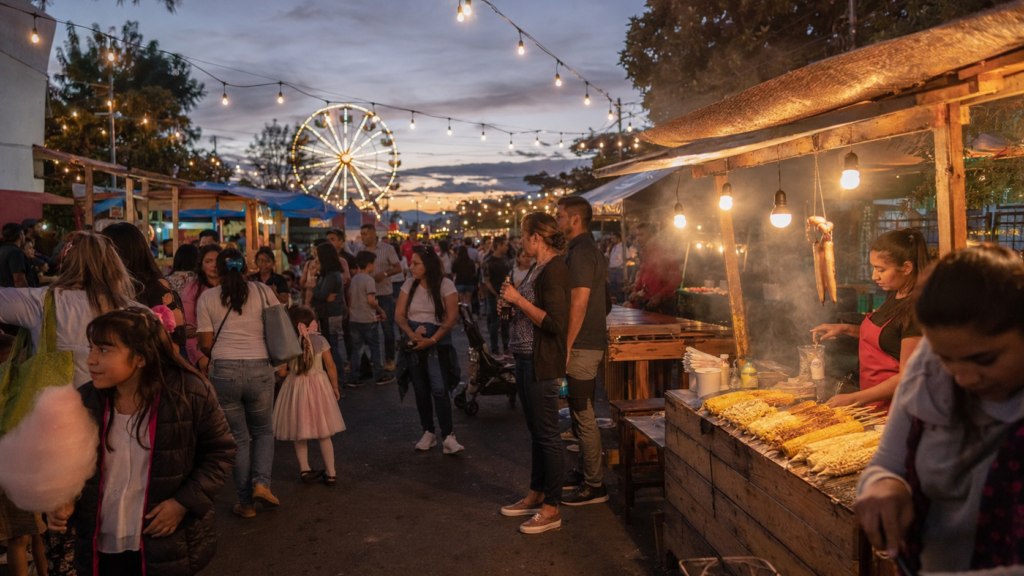
Every small town in Costa Rica has a week, sometimes only a weekend, when the entire community seems to step outside at the same time. Streets that are usually quiet fill with food stands, music, lights and the smell of fried dough; this is the turno, and most visitors never hear the word until someone invites them to one. A turno is not listed in glossy travel brochures, it rarely appears on mainstream itineraries, and yet it might be the most honest snapshot of Costa Rican social life that a tourist can experience.
Understanding what a turno actually is requires looking past the surface. On paper, it is a local fundraising festival, usually organized by a church, a school board or a community association, to raise money for repairs, scholarships or equipment. In practice, it is something closer to a cultural ritual; a moment when an entire town, regardless of age or background, gathers in one place to eat, dance, gamble a little and reconnect.
The origins of the turno are tied to Catholic tradition. Many towns hold their turno around the feast day of their patron saint, which explains why the calendar of turnos shifts from town to town and month to month. San Isidro, San Ramón, Santa Cruz and dozens of smaller communities each have their own dates, their own rhythms and their own unspoken rules about what a proper turno should include. For a foreigner trying to plan a trip around a turno, this decentralized calendar can feel confusing, yet it is also part of the charm; there is no single, marketed event, only dozens of small, deeply local ones happening throughout the year.
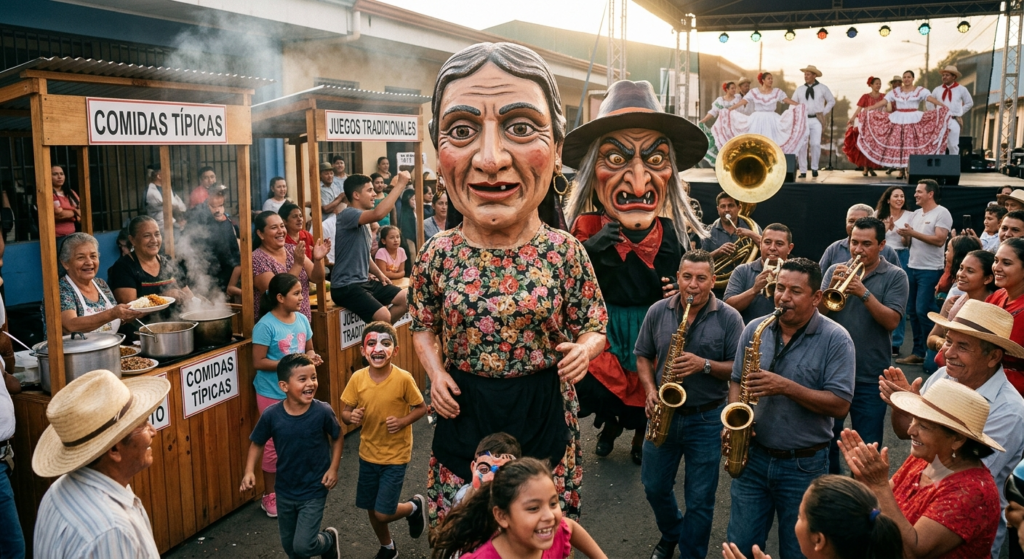
Arriving at a turno for the first time can be sensory overload. Strings of colored lights stretch across the main street or the soccer field, where most turnos take place. Wooden stalls sell tamales, chicharrón, churros, granizados and grilled corn, often prepared by the same families year after year. Music blends together from several directions at once: a marimba band near the church, reggaetón from a nearby speaker, and the carnival barker calling out prizes from a ring toss booth. Locals do not experience this as chaos; they experience it as familiarity, the same sounds and smells that have marked their childhood summers and December breaks.
One of the most distinctive features of a turno is the presence of a small, traveling carnival. Rides that would look modest anywhere else, a Ferris wheel, bumper cars, a spinning swing ride, take on outsized importance here because they only appear once or twice a year in most towns. Teenagers save allowance money for weeks to ride them, and parents budget carefully knowing the rides are not cheap relative to local wages. For visitors, riding a Ferris wheel at a Costa Rican turno offers a view that no zip line or canopy tour can replicate: church towers, red tin roofs and distant volcanoes lit by string lights and fireworks smoke.
Gambling is another central, if unofficial, attraction. Tables for bingo, raffles and a dice game known locally as tute draw steady crowds of adults who treat the turno as a rare, socially acceptable night to bet a few thousand colones. Proceeds typically go straight back into the cause the turno was organized to support, which gives the gambling a community purpose that distinguishes it from a casino. Watching grandmothers, teachers and taxi drivers shout numbers at the same bingo table is one of the more authentic social experiences a tourist can witness in Costa Rica.
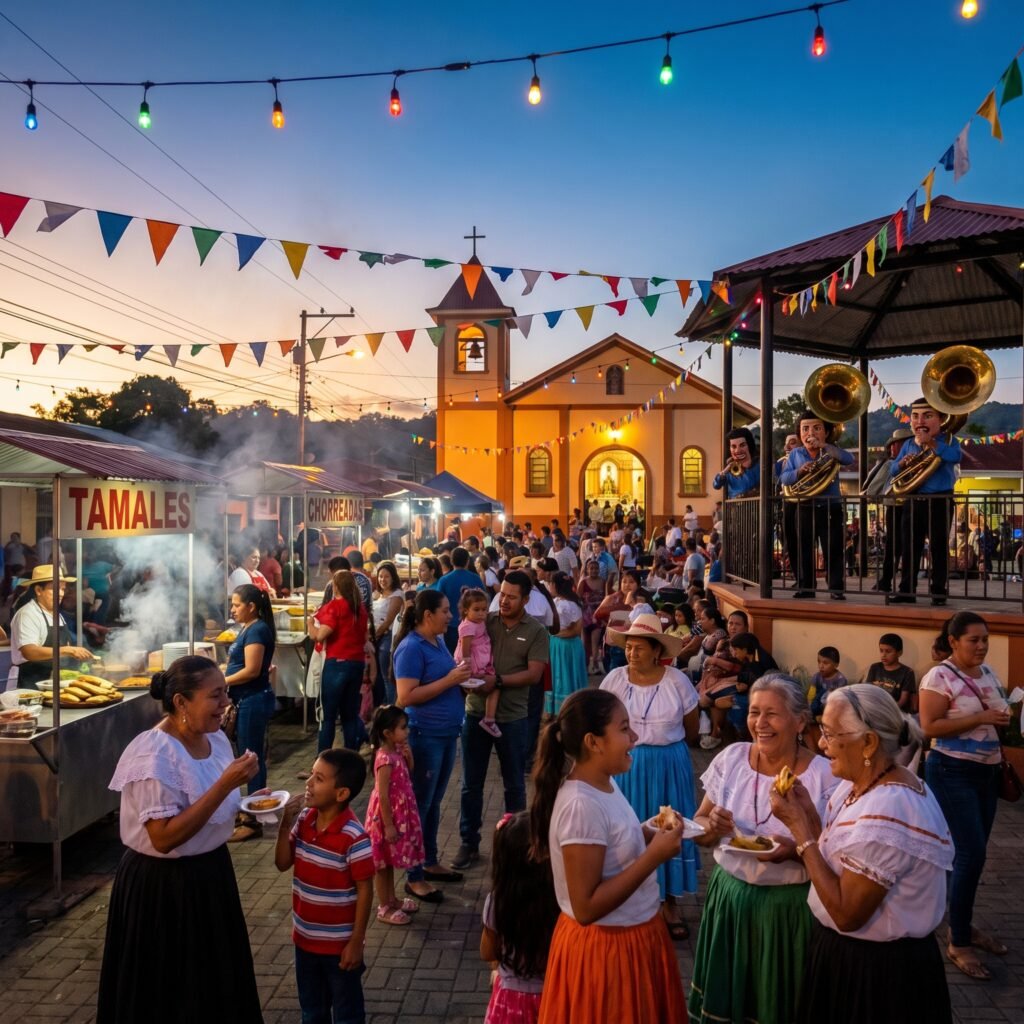
Food, though, is usually what visitors remember most. Unlike restaurant menus designed with tourists in mind, the food at a turno is cooked for neighbors. Women who have run the same tamal stand for fifteen years know exactly how much achiote and how many olives each customer prefers. Churro stands fry dough in enormous black pots that have probably been used since the turno began decades earlier. Trying tamales, chicharrón con yuca or a simple plate of arroz con pollo at a turno gives a more accurate sense of everyday Costa Rican cooking than almost any formal restaurant experience, precisely because nothing about it has been adjusted for outsiders.
There is also a strong equestrian tradition connected to many turnos, particularly in Guanacaste and rural parts of the Central Valley. A tope, or horse parade, often opens the festivities, with riders dressed in their best boots and hats guiding decorated horses through the main street before the music and rides take over. For visitors interested in Costa Rica’s cowboy heritage, watching a tope is a far more grounded introduction than any staged rodeo show built specifically for tourism.
What makes the turno particularly interesting from a cultural standpoint is its function as a social equalizer. Unlike many tourist-oriented attractions, where price determines access, the turno is built around shared, modest spending; a few thousand colones covers food, a ride and a bingo card for most families. Wealthier residents and working-class neighbors end up standing in the same lines, eating the same food and watching the same fireworks. In a country often praised for its social cohesion, the turno is one of the clearest, least curated examples of that cohesion in action.
For travelers wondering how to find one, the answer is mostly informal. Turnos are rarely advertised in English, and even Spanish-language listings tend to appear only on parish bulletin boards, community Facebook groups or handwritten posters near the local church. Asking a hotel owner, tour guide or even a taxi driver whether there is a turno nearby during a visit often produces better results than any online search. Showing up with curiosity, a willingness to try unfamiliar food and enough cash for a few rides and a bingo card is usually all that is required.
Travelers who do stumble onto a turno, whether by accident or recommendation, often describe it as one of the most memorable parts of their trip, more memorable in some cases than a beach sunset or a volcano hike. It offers something that polished attractions cannot: an unscripted evening inside the rhythm of small town Costa Rican life, where saints’ days, fried food, Ferris wheels and bingo cards combine into a tradition that has nothing to prove and everything to share.
The next time a trip to Costa Rica includes a smaller town, it is worth asking one simple question before booking another guided tour: is there a turno happening nearby this week? If the answer is yes, that modest soccer field, lit up with string lights and filled with the smell of churros, may end up being the most genuine stop on the entire itinerary.
Related topics
Traditional Costa Rican Crafts That Still Exist Today (And Why They Matter)
Costa Rican Social Etiquette: What Tourists Always Misunderstand