
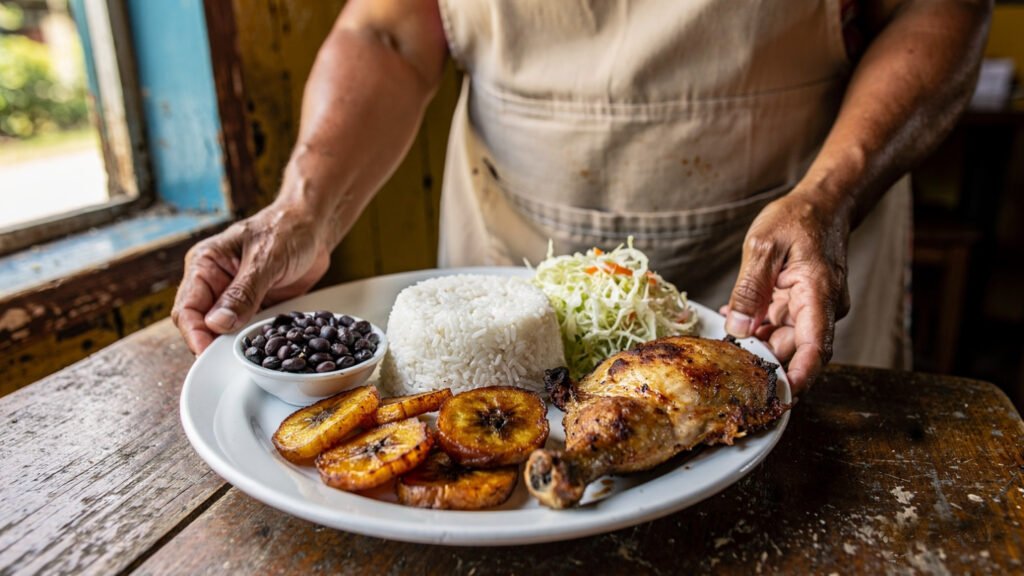
Walk into almost any soda, roadside restaurant or family kitchen in Costa Rica and there is a good chance that the most ordered item on the menu is not printed with a fancy description or accompanied by a photograph. It arrives as a single, generous plate that covers most of the table space, filled with rice, black beans, salad, plantains and a protein of your choice, and it is called a casado. It is not a dish invented for tourists, not a recipe refined by chefs and not a concept borrowed from any neighboring country. It is simply what Costa Ricans eat for lunch, day after day, and understanding it is one of the most direct routes into the texture of everyday life in this country.
The word casado translates literally to married man, and the name itself carries a story. One popular explanation traces the dish back to the tradition of Costa Rican wives preparing a packed lunch for their husbands to take to work in the fields or the city, a complete, balanced meal that could sustain a person through a full afternoon of physical labor. Another version suggests that the combination of ingredients on the plate represents a kind of domestic harmony, each component different but sharing the same space peacefully, much like the idea of a long marriage. Neither explanation has been officially documented, but both reflect something true about the dish: it was designed for real life, not for occasions.
At its core, a casado is a composed plate rather than a single recipe. What stays consistent across the country is the logic of the combination: white rice cooked simply, black beans prepared separately as a side rather than mixed into the rice, a small fresh salad, fried sweet plantains known as plátanos maduros and a protein. The protein is where the decision happens. Pollo asado, bistec, fish, pork chops, tongue, chicken in salsa or a fried egg for a vegetarian version are all common choices depending on the region and the establishment. Some sodas add a small portion of pasta, a boiled vegetable or a fried yuca as an extra component, but the essential logic of the plate remains the same: variety, balance and sufficiency on a single surface.
Rice and beans in Costa Rica are not the same as gallo pinto, which is the breakfast combination where both are cooked together with onion, cilantro and Salsa Lizano. In a casado, the rice arrives white and separate, and the beans are served as a broth or a soft side, often seasoned with garlic and a touch of culantro coyote, the local herb that bears a rough resemblance to cilantro but carries a stronger, slightly more pungent flavor. This distinction matters to Costa Ricans; ordering gallo pinto at lunch in a soda that only offers casado is a request that will likely be met with a polite correction.
The plátanos maduros deserve their own attention. These are not savory green plantains fried until crisp, which belong to a different culinary tradition entirely. They are ripe, yellow to black plantains sliced on an angle and fried slowly until the natural sugars caramelize and the interior softens into something almost custard like. The result is sweet, rich and slightly sticky, and it functions as the quiet counterpoint to the savory elements of the plate. Visitors who expect plantains to taste like bananas are usually surprised; visitors who expect them to be savory are even more surprised. Once the combination of sweet plantain against seasoned black beans and salted rice lands on the palate, however, it tends to make immediate sense.
The salad component is modest by any international standard, usually a small mound of shredded cabbage or iceberg lettuce dressed with a squeeze of lemon or a light vinegar, sometimes with a slice of tomato alongside. It is not the centerpiece of the plate, but it plays a structural role; the acidity and crunch cut through the starch and fat of the rest of the meal, keeping each bite from feeling heavy. Long before the word balance became a marketing concept in global food culture, the casado had already built it into its geometry.
Pricing is one of the most striking aspects of the casado for foreign visitors. In a local soda, a full casado with a drink typically costs between two thousand five hundred and five thousand colones, which at current exchange rates places it well under ten dollars. For that price, the portion size is almost always substantial, occasionally overwhelming for visitors accustomed to smaller lunch servings. This affordability is not accidental; the casado evolved as a working person’s meal and sodas built their entire business model around the idea that feeding someone properly should not require a large budget. In a country where restaurant prices near tourist zones can rival those in European capitals, the neighborhood soda offering a daily casado represents an entirely different economic and cultural register.
Regional variations exist across Costa Rica, though they tend to be subtle rather than dramatic. Along the Caribbean coast, the casado may arrive with rice cooked in coconut milk instead of water, and the protein is more likely to be fish prepared with spices that reflect the Afro Caribbean culinary tradition of Limón. In Guanacaste, portions tend to be larger and corn based preparations sometimes appear alongside the standard components. In San José, the soda casado is an urban staple eaten quickly at midday by office workers and construction crews alike, its consistency part of its appeal.
For visitors, the casado is often the first genuinely local food experience that does not feel designed for outside consumption. Unlike the coffee tastings, the chocolate tours and the tropical fruit platters arranged for tourist menus, a casado at a neighborhood soda arrives exactly as it would for the person sitting at the next table who has been eating there every weekday for fifteen years. The cook does not adjust the seasoning, the portion or the presentation based on who orders it. That consistency is a form of respect, and most visitors who eat their first casado in an unpretentious setting tend to recognize it.
Ordering one requires almost no Spanish. A finger pointed at the word casado on a handwritten chalkboard menu, followed by a choice of protein indicated by pointing at the list, is enough to set the process in motion. What arrives a few minutes later is not just lunch; it is a compact version of the Costa Rican table, assembled quickly, eaten without ceremony and quietly sustaining of an entire way of life.
Any trip to Costa Rica that passes through only tourist restaurants and international hotels misses the casado entirely, which means it misses something fundamental. The dish does not ask for attention or explanation; it simply shows up, covers the plate and does its job. In a country famous for understatement, that might be the most Costa Rican thing about it.