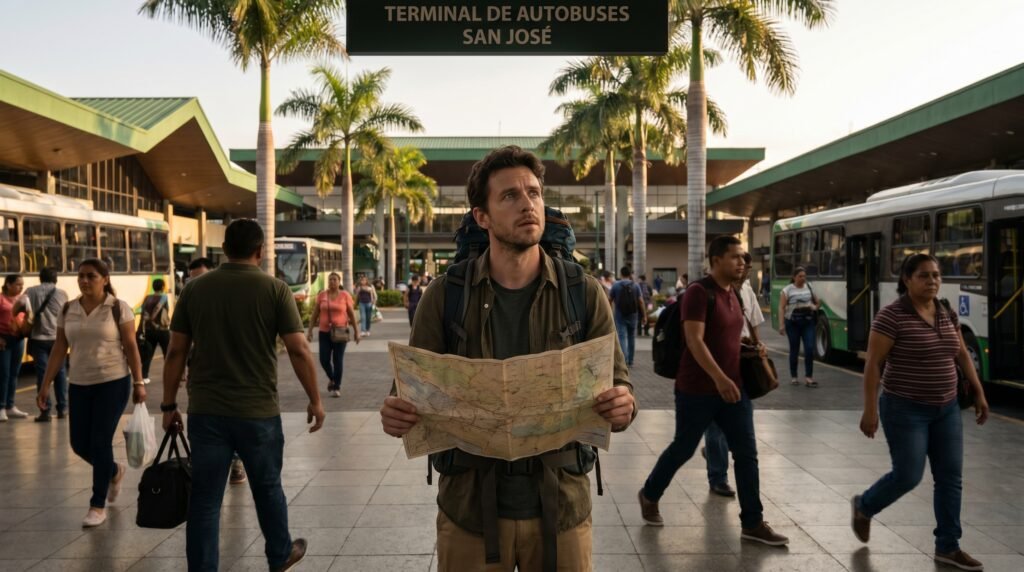
I’ve watched it happen hundreds of times. Someone books their flights months in advance, builds a color-coded itinerary, reserves every hotel, maps out every transfer, and arrives in Costa Rica fully prepared, for a country that doesn’t quite exist.
They planned for a place. They forgot to prepare for a culture.
That’s the mistake. Not the logistics. Not the budget. Not even the rainy season timing, which yes, also matters. The real mistake is treating Costa Rica like a backdrop a collection of landscapes, activities, and restaurants to check off, instead of a living place with its own rhythms, values, and unspoken rules. And that misalignment between expectation and reality is responsible for more frustrating trips than bad weather ever will be.
Let me explain what I mean.
The itinerary that works against you
Ticos have a complicated relationship with time, and I say that with full affection and zero judgment because I am one. Plans here are more like suggestions. A tour that starts at 8:00 might start at 8:30. The restaurant your hotel recommended might be closed on a Tuesday for reasons nobody fully understands. The road to that waterfall might be impassable after two days of rain. None of this is dysfunction. It’s a different operating system one where flexibility is considered wisdom, not failure.
Visitors who over-schedule their trip spend half of it frustrated. Visitors who leave room for the unexpected end up with the best stories. There’s a reason we say pura vida constantly: it’s not a marketing slogan, it’s an instruction.
Thinking “friendly” means “fast”
Costa Ricans are genuinely warm people. We will help you, welcome you, and make you feel at home in a way that is real, not performed. But warmth here is not the same as efficiency. Service moves at a pace that reflects a society that values presence over speed. Your waiter is not ignoring you. Your host isn’t being unprofessional. Things simply take the time they take, and rushing them doesn’t speed anything up, it just makes the energy worse.
The visitors who enjoy Costa Rica most are the ones who stop checking the time every ten minutes and start noticing what’s actually in front of them.
Only booking the tourist trail
Here’s something the major travel sites won’t tell you: the Costa Rica that most tourists visit is a curated version, designed to be easy and comfortable and largely disconnected from where and how ticos actually live. Tamarindo, Manuel Antonio, La Fortuna, beautiful, yes. But if that’s all you see, you’ve visited a version of Costa Rica, not Costa Rica itself.
The country reveals itself in smaller places. In a Heredia neighborhood at dusk. In a pulpería in Cartago where the owner knows every customer by name. In a Sunday market where families come not to buy but to be together. These places don’t have TripAdvisor pages. They require curiosity and the willingness to slow down enough to find them.
Underestimating how much culture shapes the experience
This one is subtle but it might be the most important. Costa Rica has a distinct national character, indirect communication, a strong sense of dignity, a tendency to say “yes” when the real answer is more complicated, a deep value placed on not causing discomfort to others. If you don’t know this going in, you’ll misread situations constantly.
You’ll think the taxi driver agreed on a price when he was actually just being polite. You’ll think a local’s “maybe tomorrow” means tomorrow. You’ll wonder why someone smiled and nodded through a conversation where nothing was actually resolved. None of this is deception. It’s a communication style built on preserving harmony and once you understand it, it starts to make a kind of profound sense.
Treating “Pura Vida” as a catchphrase
Tourists love to say pura vida. Most say it like a souvenir they picked up at the airport. But here’s what the phrase actually holds: an entire philosophy about accepting life as it comes, about not letting circumstances steal your peace, about finding enough in ordinary moments. It’s not performed happiness. It’s practiced resilience with a warm face.
When a tico says pura vida after something goes wrong, they’re not in denial. They’re choosing, consciously or not, not to let the moment break them. That’s worth understanding before you arrive and worth carrying home when you leave.
The best trips to Costa Rica aren’t the ones with the most activities. They’re the ones where something shifted, where a traveler stopped being a tourist for a moment and started actually paying attention to the place and its people.
That shift doesn’t happen by accident. It happens when you stop planning for a destination and start preparing for an encounter.
Costa Rica will meet you more than halfway. It always does.
But it helps to know who you’re actually meeting.