
Culture shock has a bad reputation; it sounds dramatic, almost like an overstatement reserved for people who traveled somewhere truly remote. But culture shock is simply what happens when the assumptions a person did not know they were carrying collide, repeatedly, with a different set of assumptions that the world around them is quietly operating on. Costa Rica produces this collision with surprising regularity, precisely because its surface warmth and apparent familiarity lull foreigners into expecting fewer differences than actually exist.
I have watched this collision happen to dozens of foreigners over the years, in my workplace, in my neighborhood, through friends who moved here permanently and friends who only stayed a few months before deciding the adjustment was more than they wanted to make. The shocks that hit hardest are rarely the ones foreigners expect before arriving. They expect to be surprised by wildlife or weather. They are actually destabilized by something quieter and more structural, the realization that an entire system of unspoken social rules is operating around them, one they were never taught and cannot intuit from outside.
I am Costa Rican, I am thirty five years old, and I have lived my entire life inside the system that produces these shocks without ever experiencing them as shocking. This article is my attempt to name the ones that hit hardest, honestly and without minimizing them, because the foreigners who eventually thrive here are almost always the ones who had someone explain these things clearly instead of leaving them to be discovered the hard way.
Some of what follows is uncomfortable. All of it is true, and all of it is offered with genuine respect for how difficult real cultural adjustment actually is.
If you are planning a move, a long stay, or simply want to understand a place more deeply than a vacation usually allows, this is the article that prepares you for the parts nobody else will tell you about in advance.
There is a specific moment, usually somewhere between the third week and the third month, when a foreigner living in Costa Rica stops noticing the wildlife and starts noticing something harder to name. The volcano view from the kitchen window has become ordinary. The novelty of gallo pinto for breakfast has worn into routine. And in that quieter, less photogenic phase of the adjustment, the real cultural shocks begin to surface, the ones that were always present but were initially obscured by the excitement of arrival. What follows are the shocks that, in my experience watching this process unfold for years, hit foreigners hardest and take the longest to genuinely metabolize.
The bureaucracy that resists every instinct for efficiency
Almost every foreigner who relocates to Costa Rica eventually collides with its administrative systems, and the collision is rarely gentle. Opening a bank account, transferring a driver’s license, applying for residency, registering a vehicle, any of these can require documents that contradict each other, offices that give different answers depending on which employee you speak to, and timelines that stretch for months without explanation. For people coming from highly efficient bureaucratic cultures, this experience produces genuine distress, not because any single obstacle is severe, but because the cumulative unpredictability undermines a basic assumption that systems should function logically. The foreigners who adjust best are the ones who stop expecting logic and start expecting patience as the actual requirement.
Realizing that warmth and intimacy are not the same thing
This shock arrives more slowly and cuts deeper. Foreigners experience extraordinary warmth from Costa Ricans in their first months, the friendly neighbor, the helpful coworker, the stranger who goes out of their way to assist. Many interpret this warmth as the beginning of fast, deep friendship, the way it might function in their home culture. Months later, they notice that those same warm relationships have not deepened into the kind of vulnerable, reciprocal closeness they expected, and the realization that warmth here operates on a separate track from intimacy produces a specific, quiet loneliness that catches many foreigners off guard. Real Costa Rican friendship exists, but it is built slowly, inside family networks and long term proximity, not through surface warmth alone.
“The cultural shocks that hit hardest are rarely dramatic. They are slow realizations that an entire system of unspoken rules has been operating quietly around you, one you were never taught and cannot simply intuit from outside.”
The cost of living that does not match the online promise
Foreigners frequently arrive having read that Costa Rica is an affordable paradise, and the financial reality of the Central Valley delivers a genuine shock once groceries, rent, vehicle maintenance, and imported goods are actually priced out. Import tariffs make electronics and many household items considerably more expensive than in the United States. Housing in safe, comfortable neighborhoods has risen significantly in recent years. The financial recalibration required, especially for people relying on a fixed retirement income, can be one of the most destabilizing shocks of the entire relocation, precisely because it contradicts the expectation that drew them here in the first place.
The indirectness that makes simple answers hard to get
Foreigners accustomed to direct communication experience genuine disorientation when they realize that a clear yes or no is harder to obtain in Costa Rica than they expected. Contractors who say a job will be finished by Friday and mean something closer to next month. Friends who confirm plans they have no intention of keeping. Service providers who avoid saying no directly even when the answer is clearly no. This is not deception in the way foreigners initially interpret it, but the gap between what is said and what is meant takes real time to learn to read, and the learning curve itself is a significant part of the shock.
The isolation that comes from not speaking Spanish well enough
Foreigners who do not speak fluent Spanish often underestimate, before arriving, how much that gap will isolate them from the actual texture of Costa Rican life. English is common in tourist areas and international business contexts, but daily life, neighborhood relationships, government offices, and family gatherings operate in Spanish, and foreigners who rely on English find themselves increasingly confined to expat social circles, watching a richer version of the country pass by just out of reach. The shock here is less a single moment and more a slow accumulating awareness that comfort and immersion are pulling in opposite directions.
The traffic and infrastructure gaps in a country marketed as developed
Costa Rica’s global reputation for environmental leadership and political stability leads many foreigners to expect infrastructure that matches more developed nations. The reality of San José’s traffic, the inconsistent road quality outside major highways, and the landmark based address system instead of numbered streets produces a genuine recalibration of expectations, one that takes most newcomers several frustrating months to fully accept rather than fight.
The realization that safety concerns are real, not exaggerated
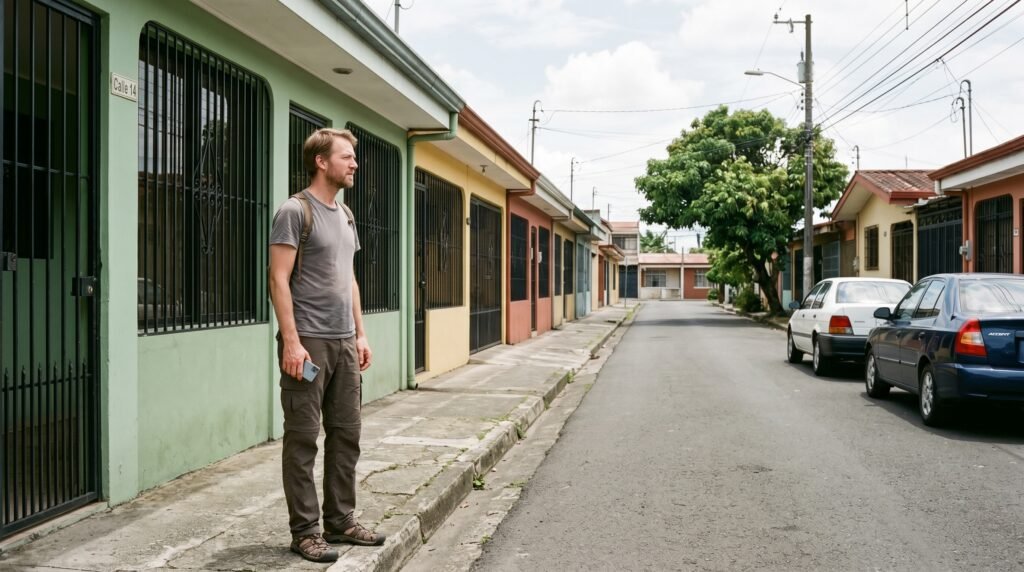
Foreigners who arrive expecting the crime-free paradise sometimes promised by marketing material are shocked to learn that urban theft, particularly in San José and certain tourist zones, is a genuine and ongoing concern. The security bars on every home, which initially seem aesthetically jarring, eventually register as a rational response to a real risk profile, and accepting that Costa Rica is safe relative to many of its neighbors but not without real security considerations is itself a necessary recalibration that many foreigners resist longer than they should.
What these shocks have in common
Every shock described here shares a common root, the gap between an idealized expectation, often built from selective marketing and curated social media content, and the more complicated reality of an actual country with actual systems, actual history, and actual limitations. None of these shocks mean Costa Rica is a bad place to live. They mean it is a real place, with the genuine texture that real places always carry, texture that glossy travel content consistently edits out.
The foreigners who navigate these shocks successfully are almost never the ones who avoided them. They are the ones who let the disillusionment happen honestly, adjusted their expectations to match the actual country rather than the marketed one, and discovered that the real Costa Rica, complications included, was still worth the adjustment it demanded of them.