Let me tell you something we don’t usually say out loud.
We like you. We genuinely do. Costa Rica was named the friendliest country in the world by Condé Nast in 2024, and that didn’t come from nowhere. The warmth is real. The smiles are real. The “con mucho gusto” and the pura vida and the willingness to give you directions even when we’re not entirely sure of the route all of it is real.
But warmth is not the same as contentment. And in 2025, the honest answer to how Costa Ricans feel about tourists is more complicated than any travel brochure will tell you including ours.
We are genuinely glad you come
Start here, because it matters. Tourism is not a side industry in Costa Rica. It is woven into the fabric of how families eat, how communities survive, how the country funds the conservation of the very forests and beaches that make it worth visiting in the first place. When you book a local tour, eat at a soda, hire a tico guide, or stay at a family-run hotel, you are participating in something that has real and direct impact on real people’s lives.
Most Costa Ricans understand this without needing to think about it. We grew up in it. The relationship between ticos and tourists has existed for generations, and for most of that time it was warm, mutual, and relatively uncomplicated.
That started to shift after the pandemic.
Something changed, and we’re not pretending it didn’t
The years following COVID brought a wave of visitors and foreign residents unlike anything the country had seen before. Of the 2.9 million foreign tourists who arrived by air in 2024, more than half came from the United States. Their influence reshaped not just beach towns, but the basic economics of daily tico life.
In hotspots like Nosara and Monteverde, landlords began favoring short-term vacation rentals over long-term leases, and rents tripled. Teachers, nurses, tour guides, and the very service workers who make tourism function were pushed out of the towns they served. Rents for even small apartments soared to levels far beyond what most ticos could afford often double or even triple the average local income.
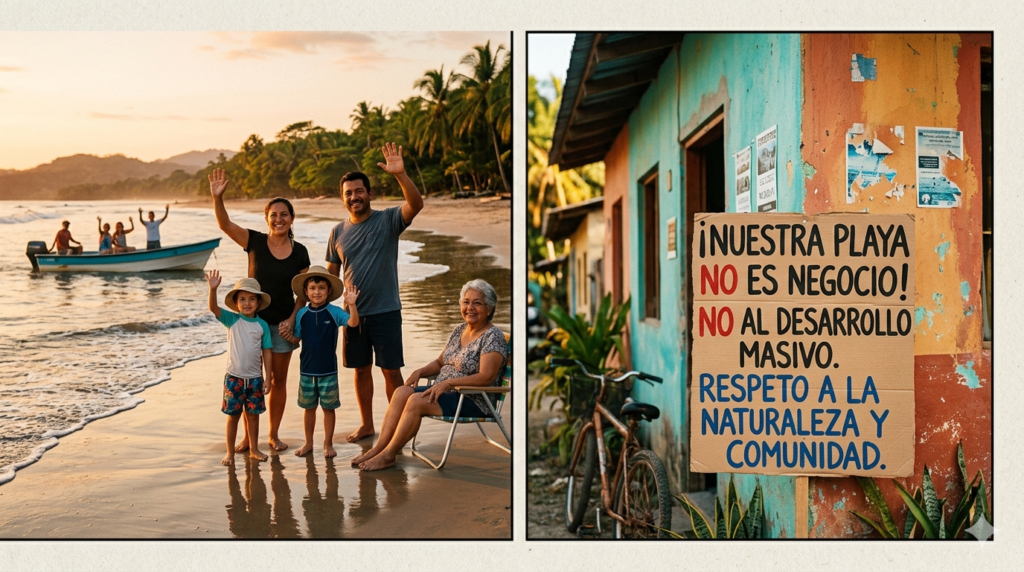
A 2025 national survey by the National University of Costa Rica found that 86.8% of Costa Ricans believe that foreigners are taking over land in coastal areas. Protests followed. Movements formed. The conversation that ticos had been having quietly at kitchen tables started happening loudly in the streets.
There is a palpable animosity in some local communities toward foreigners, and it would be dishonest to pretend otherwise. But it is also important to understand what that animosity is actually directed at because it is rarely directed at the traveler who came for a week, stayed in a local hotel, and tried to learn a few words of tico slang.
The distinction that matters
Most ticos are capable of separating the tourist from the system. The frustration is not with the family from Chicago who fell in love with the country on a ten-day trip. It’s with the investor who bought five properties to flip as Airbnbs. It’s with the expat who moved here permanently, refuses to speak Spanish, demands that everything work like it does back home, and drives up prices without participating in the community that sustains them.
Many Costa Ricans maintain that foreigners who make an effort to integrate remain welcome. The distinction isn’t nationality it’s attitude. It’s whether you came to experience a place or to consume it. Whether you came to learn something or to replicate what you already had somewhere else at a lower cost.
That line is something every visitor draws for themselves, whether they’re aware of it or not.
What we actually want from you
We want you to eat at the soda, not just the resort restaurant. We want you to learn what “diay” means, even if you never say it right. We want you to ask the taxi driver about his family and actually listen. We want you to understand that when we say pura vida, we are not performing a tourism campaign, we are offering you a genuine philosophy, and we’d appreciate it if you treated it as such.
We want you to notice that Costa Rica is a country with people in it. Not a backdrop. Not a wellness retreat. Not a place that exists for the purpose of your Instagram feed. A living country, with neighborhoods and schools and corner stores and families trying to afford the same coastline that the rest of the world has decided to buy.
Come here and see all of it, not just the parts that were designed for you.
The truth is that most Costa Ricans want the same thing from tourism that we’ve always wanted: a relationship, not a transaction. A guest, not a consumer. Someone who leaves the place a little better than they found it or at the very least, no worse.
That’s not a complicated ask.
And in our experience, the visitors who understand it, really understand it, are the ones we remember long after they’ve gone home.
Those are the ones we’re always glad came.