Is Costa Rica Safe for Solo Travelers?
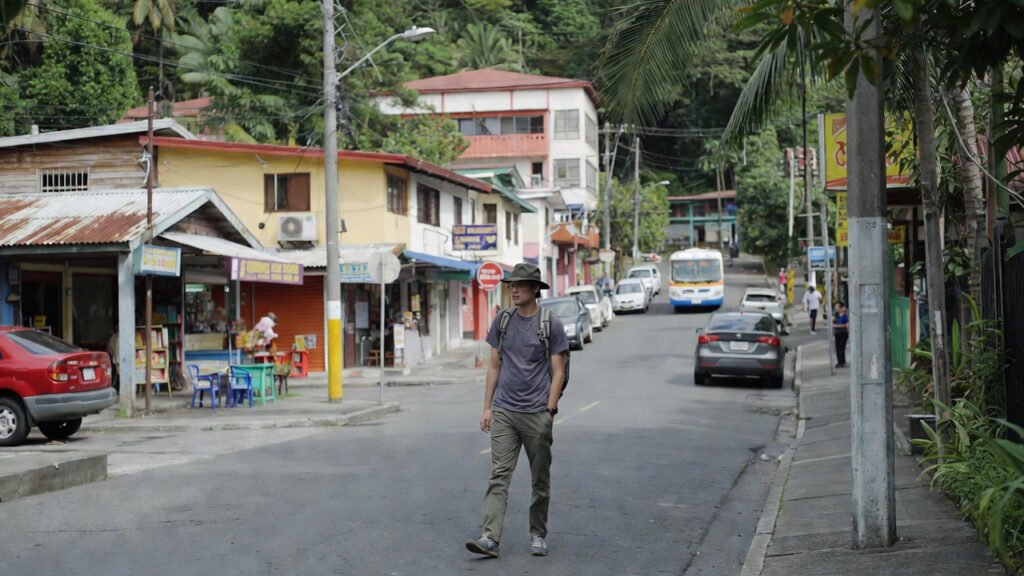
If you ask Google whether Costa Rica is safe for solo travelers, you’ll find quick answers, safety indexes, and neatly summarized advice. If you ask a Costa Rican, the answer tends to be slower, more contextual, and rarely reduced to a simple yes or no.
Thinking of traveling alone in Costa Rica? Read this first
Culture Shock for Non-Spanish-Speaking Tourists in Costa Rica
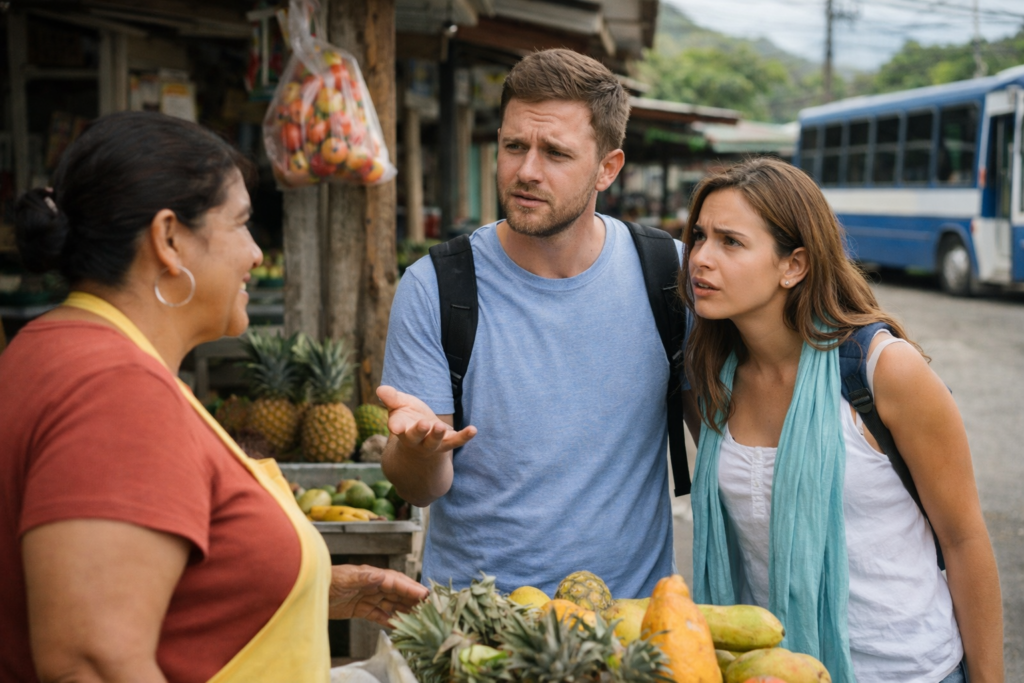
If you don’t speak Spanish and you’re coming to Costa Rica, there’s something important you should know.
Most of the shock you’ll feel here has nothing to do with safety, food, or the country itself. It comes from something quieter — the feeling that you don’t fully understand what’s happening around you, even when everyone is being kind.
Costa Ricans are generally warm, patient, and welcoming. People will try to help you. They’ll smile. They’ll make an effort. And still, you may walk away from interactions feeling slightly lost, unsure, or emotionally tired. That’s not because you did anything wrong. It’s because language shapes how close or distant the world feels.
When you don’t speak Spanish, everyday moments require more energy. Buying something simple turns into a small performance. You rely on gestures, tone, facial expressions. You nod a lot. You smile more than usual. You hope you understood correctly.
And most of the time, you do. But not completely.
One of the first cultural surprises is that Costa Ricans don’t rush conversations to make them efficient. Silence is allowed. Pauses aren’t uncomfortable. If you’re used to fast, direct exchanges, this can feel confusing. You may wonder if something went wrong or if the other person didn’t understand you.
Often, nothing is wrong. The conversation is simply moving at a different emotional pace.
Another common shock is indirect communication. Costa Ricans tend to avoid saying “no” directly. Not because they’re dishonest, but because they value harmony. For a non-Spanish speaker, this can be tricky. You might hear “maybe,” “we’ll see,” or “later” and interpret it literally. Later, you realize it meant “probably not.”
Without language, reading these nuances becomes harder. You’re listening not just to words, but to tone, context, and what isn’t being said.
There’s also the moment when you realize how much humor you’re missing. Costa Rican humor is subtle, often sarcastic, and very contextual. People may laugh, and you’ll smile along, unsure why. It’s a small thing, but it creates a feeling of being slightly outside the circle.
That distance can be emotionally surprising.
Many visitors expect culture shock to look dramatic — frustration, anger, discomfort. In Costa Rica, it’s often softer. It feels like mental fog. Like always being half a step behind. Like constantly adjusting.
And that adjustment is tiring.
But here’s the part most people don’t talk about: this shock usually fades into something else. Curiosity. Humility. A different way of paying attention. When language isn’t fully available, you start noticing tone, rhythm, body language. You become more patient. You let go of control a little.
In a strange way, not speaking Spanish forces you to slow down — and Costa Rica meets you there.
Locals don’t expect you to be fluent. A few words go a long way. Even badly pronounced Spanish is received with warmth, not judgment. What matters isn’t correctness, but effort.
And over time, you realize something important: you don’t need to understand everything to feel welcome. You need to stay open, observant, and willing to laugh at small misunderstandings.
Culture shock in Costa Rica isn’t a wall. It’s a gentle push out of your comfort zone. It asks you to listen more than you speak. To accept ambiguity. To trust that connection doesn’t always require perfect communication.
If you come expecting clarity, you might feel lost.
If you come expecting experience, you’ll be just fine.