
Ask ten travelers what Costa Rica is like and you will hear about rainforests and surf. Ask ten Ticos what visitors get wrong and the answers are far more human. Most misunderstandings come from good intentions meeting different habits. Here are fifteen of them, explained by someone who lives here, so you can read a smile, a promise, or a nickname correctly. This is not a rulebook, just the context I wish every visitor had.
1. Titles and Usted Show Respect
Ticos use “usted,” the formal “you,” even with family and friends. Adding “don” or “doña” before a first name, like “don Carlos,” signals warmth and respect, not distance. If someone addresses you this way, take it as kindness, and try it yourself with older people.
2. Affectionate Words Are Not Flirting
Shopkeepers, waitresses, and older women may call you “mi amor,” “mi reina,” or “corazón.” It sounds romantic to English ears, but it is simply a warm, everyday way of being friendly. Smile, say thank you, and enjoy it.
3. Family Is the Center of Everything
Ask a Tico about their plans and the answer often involves a mother, a grandmother, or a cousin’s birthday. Mother’s Day on August 15 is a national holiday, which says a lot. Do not take it personally if a family obligation beats your invitation to dinner.
4. Several Generations Often Share One Home
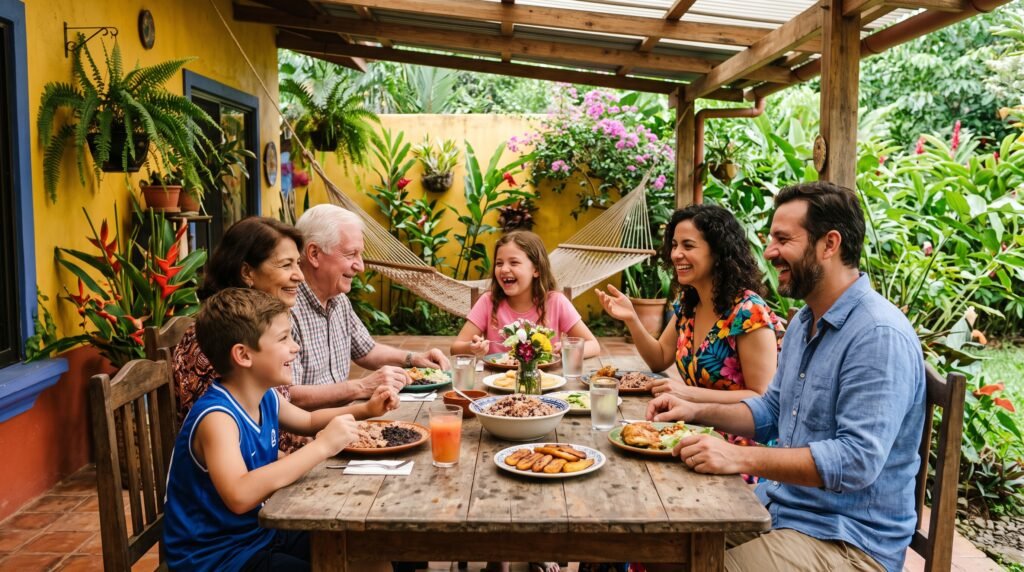
It is common for adult children to live with their parents until marriage, and grandparents often live nearby or under the same roof. It is how families look after one another, so visiting a home can feel like meeting a whole household.
5. Personal Space Can Feel Closer
People may stand a little closer in lines, touch your arm during a conversation, or sit beside you on a half-empty bus. None of this is rude or an invasion. It is simply how many Ticos show they are comfortable with you.
6. Disagreement Stays Calm and Polite
Arguing loudly in public is considered embarrassing. Ticos usually disagree with a joke, a pause, or a softened phrase like “puede ser, pero…” (maybe, but…). Silence can also be a polite way of disagreeing. When you have a complaint, a smile gets far more help than a raised voice.
7. Nicknames Are Affection, Not Insults
Friends may call each other “Gordo,” “Flaco,” or “Macho” (fat, skinny, blond) with a big smile. Teasing is a sign of closeness here. Visitors should not copy it right away, but there is no need to take offense if a friendly local does it to you.
8. Read Invitations Carefully
A casual “we should get coffee sometime” is often a friendly goodbye, not a booking. A real invitation comes with a day, a time, and usually an address. When you get one, say yes if you can, and explain kindly if you cannot.
9. Goodbyes Take a While
Leaving a Tico home or party quickly can seem abrupt. Hosts often insist you stay longer, and the farewell may last half an hour at the door, with more stories, hugs, and leftovers. Plan extra time, and treat it as a compliment.
10. Announce Yourself at the Gate
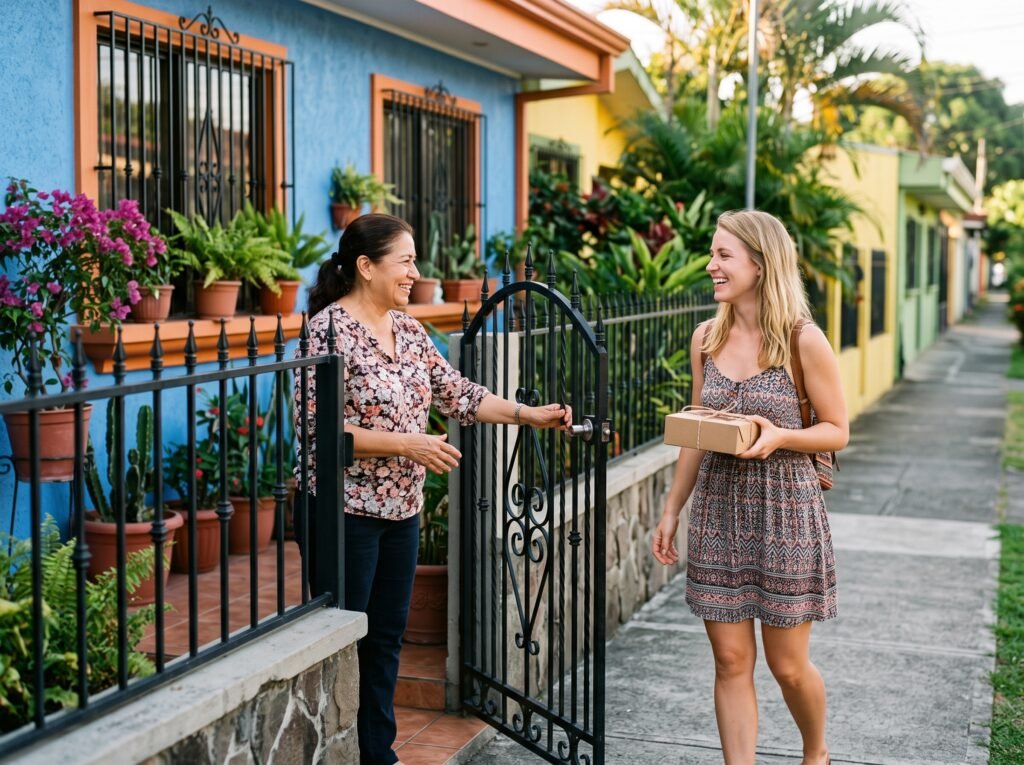
Many homes have gates or bars on the windows. That is habit, not hostility. When you arrive, call out “¡Upe!” to let the family know you are there. Once inside, watch the hosts: some homes expect shoes off, many do not, and nobody minds if you ask.
11. Celebrations Are Loud and Family-Centered
On September 14, children carry handmade lanterns through the streets, singing the national anthem. In December, families spend days making tamales together. Celebrations here are not tourist shows. They are neighborhood events, and visitors who join in politely are usually welcomed warmly.
12. Older Adults Come First
Respect for elders is part of daily life. Costa Rican law gives older adults priority lines in banks and many public places, and giving up your seat on a bus is expected. Greet older people first, use their titles, and let them speak without rushing.
13. “Gringo” Is Rarely an Insult
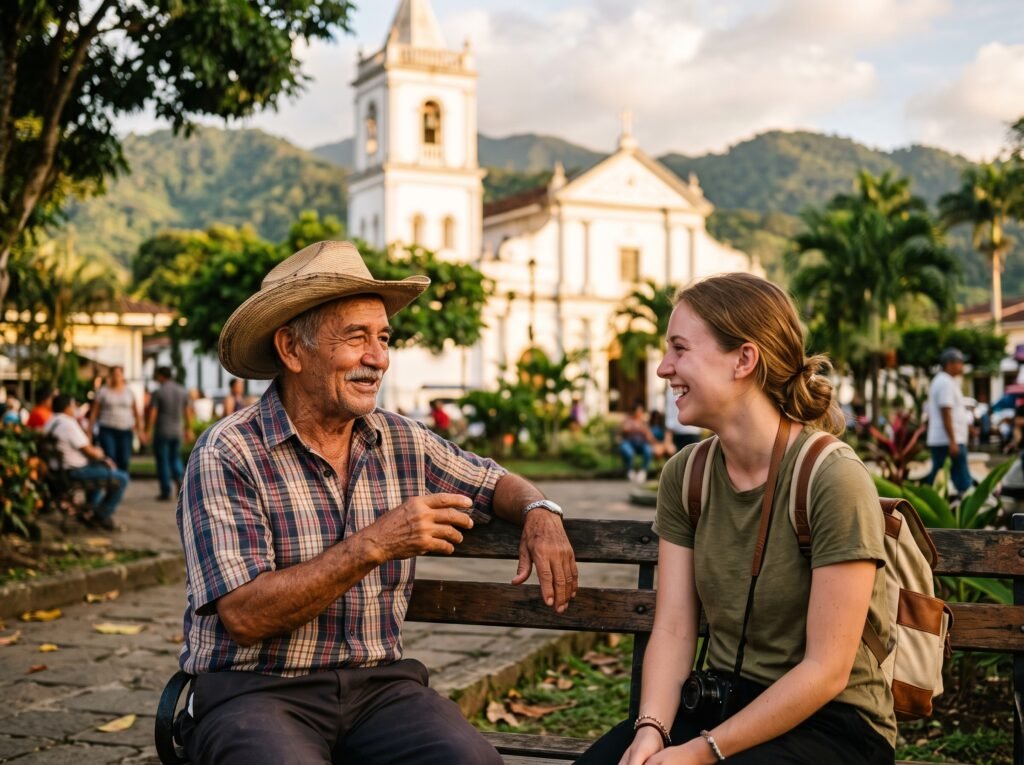
Ticos often use “gringo” for any foreign visitor, usually without bad intent. Locals are curious about you. Expect questions about where you are from, how long you are staying, and whether you like the country. Answer warmly, and ask about their lives too, because the conversation is meant to go both ways.
14. Pura Vida Does Not Mean No Problems
Pura vida is a greeting, a thank-you, and a philosophy, but it is not blind positivity. Ticos complain about traffic, prices, and bureaucracy as much as anyone. The phrase is more a way of keeping perspective and moving on with a smile.
15. Costa Rica Is Not One Big Jungle Lodge
Many Ticos live in towns and cities, especially in the Central Valley, with schools, offices, traffic, and weekend errands. The nature is real and worth visiting, but daily life looks more like a busy Latin American town than a nature documentary. Spend a day in a local neighborhood and you will see it.
Before You Go
Most of these misunderstandings fade the moment you slow down and ask. Ticos are proud of their country and happy to explain it, usually over coffee. Arrive curious, stay humble and patient, and you will leave with more than photos: you will leave with a few friends who still say hello when you come back.