
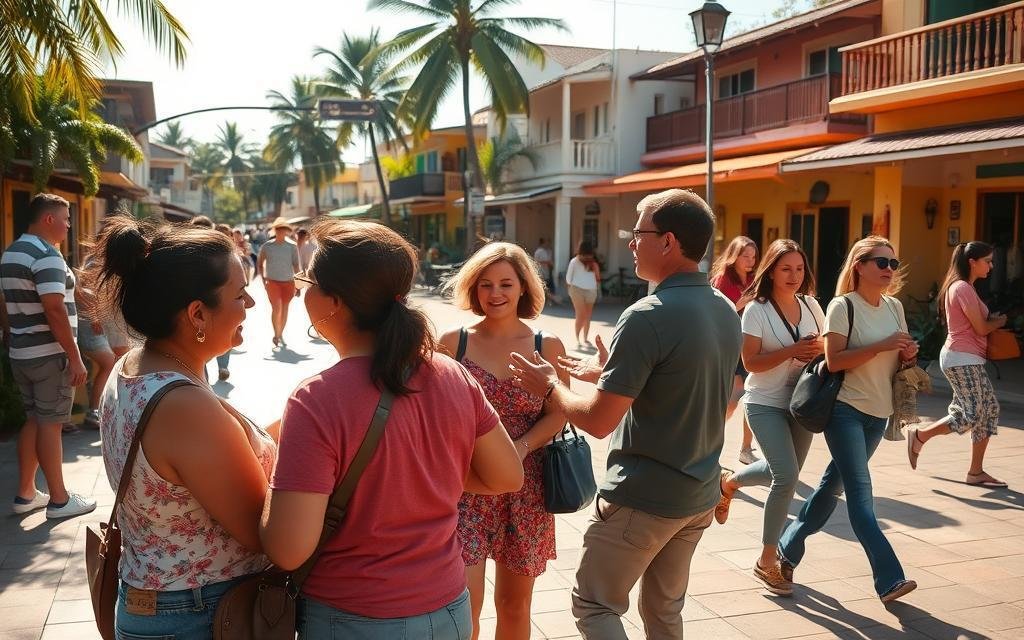
Arriving in Costa Rica often feels like a dream at first. The pace is slower, the environment is welcoming, and the atmosphere carries a sense of ease that many foreigners find immediately appealing. But as the initial excitement settles, something deeper begins to surface.
The differences are subtle, but they are everywhere.
What most people don’t realize before arriving is that culture shock in Costa Rica doesn’t come from dramatic contrasts it comes from small, everyday moments that don’t behave the way you expect them to.
Time Doesn’t Work the Same Way
One of the first things foreigners notice is that time feels… flexible.
Plans are made, but they are not always followed exactly. “Right now” doesn’t necessarily mean immediate. Schedules exist, but they often adapt to circumstances rather than controlling them.
For those used to punctuality and structure, this can feel frustrating at first. But over time, it becomes clear that this flexibility is not about inefficiency it’s about prioritizing the present moment over rigid timelines.
This shift is often the first real introduction to the Costa Rican lifestyle.
Communication Is Indirect
In many cultures, communication is clear and direct. In Costa Rica, it tends to be softer, more nuanced, and sometimes intentionally vague.
You may hear phrases like “maybe,” “we’ll see,” or “later,” without a clear commitment. Direct refusals are often avoided in favor of maintaining harmony and politeness.
For foreigners, this can be confusing. It can feel like a lack of clarity. But in reality, it reflects a cultural preference for avoiding confrontation and preserving positive social interactions.
Understanding this changes how you interpret everyday conversations.
Customer Service Feels Different
Service in Costa Rica is not driven by urgency in the same way it is in more fast-paced countries.
Waiting longer than expected for food, for assistance, for responses is common. But it’s not necessarily seen as poor service. It’s simply a different rhythm.
Interactions tend to be more human and less transactional. There is less pressure to rush, and more space for natural flow.
For foreigners, adjusting expectations is key. What feels slow at first often becomes normal over time.
Plans Change (A Lot)
Even when plans are clearly arranged, they can shift unexpectedly.
A meeting might be postponed. A visit might turn into something longer not happen at all. External factors like weather, traffic, or personal situations often reshape the day.
This unpredictability can feel chaotic, especially for those who rely on structure. But it also introduces a level of spontaneity that many people grow to appreciate.
Life becomes less about control and more about adaptation.
Personal Space Is More Fluid
Social interactions in Costa Rica tend to be warm, open, and close.
People stand closer, conversations feel more personal, and there is often a stronger sense of familiarity even in casual encounters. Greetings are important, and skipping them can feel abrupt.
For foreigners, especially those from more reserved cultures, this can feel overwhelming at first. But it also creates a sense of connection that is difficult to replicate elsewhere.
Processes Aren’t Always Efficient
Whether it’s paperwork, transportation, or daily logistics, processes can feel slower and less structured than expected.
Things may require multiple steps. Systems may not always be clearly defined. And solutions often emerge through interaction rather than strict procedure.
This can be one of the more challenging aspects of adapting to life in Costa Rica. It requires patience, flexibility, and a willingness to navigate uncertainty.
But it also reveals a different way of solving problems one that is less rigid and more human.
Life Is Less About Productivity
Perhaps the most profound culture shock is the shift away from constant productivity.
In many countries, time is closely tied to output what you accomplish, how efficiently you work, how much you produce. In Costa Rica, that connection is softer.
There is more space for rest. More value placed on relationships. More acceptance of slowing down.
At first, this can feel uncomfortable. It may even create a sense of guilt for doing less. But over time, many foreigners begin to see it differently.
They start to feel less pressure.
A Shift in Perspective
What makes culture shock in Costa Rica unique is that it doesn’t push you away it invites you to adjust.
The differences are not barriers, but signals. They reflect a culture that values balance over speed, connection over efficiency, and presence over control.
Adapting to this environment takes time. It requires letting go of certain expectations and embracing a different rhythm.
But for many, that adjustment becomes one of the most meaningful parts of the experience.
Final Thoughts
Costa Rica doesn’t change who you are but it changes how you experience daily life.
The things that feel confusing at first often become the things you appreciate most. The lack of urgency becomes relief. The flexibility becomes freedom. The differences become understanding.
And somewhere along the way, what once felt unfamiliar begins to feel natural.
Because culture shock, in this case, is not just about adapting to a new place.
It’s about discovering a different way of living.