
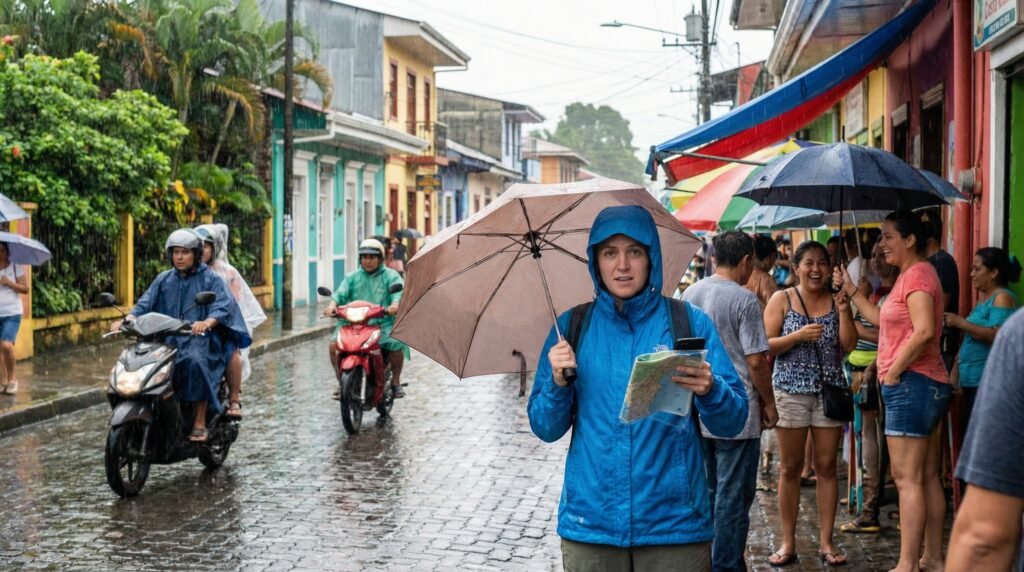
For many foreigners arriving in Costa Rica, the realization comes quietly.
A plan is made simple, clear, seemingly confirmed. A time is agreed upon, a place is set, and expectations form naturally. But when the day arrives, something shifts. The plan changes. It moves. Sometimes, it disappears altogether.
At first, this can feel disorienting.
In cultures where structure defines daily life, plans are commitments. They are fixed points in time, markers of reliability and respect. When those plans begin to bend or dissolve, it’s easy to interpret it as disorganization, or even indifference.
But in Costa Rica, the reality is different.
Flexibility is not a flaw in the system it is the system.
A Different Relationship with Plans
In Costa Rican culture, plans are often seen as intentions rather than obligations. They exist, but they are not rigid. They adapt to circumstances, to emotions, and to the unpredictable flow of daily life.
A typical scenario unfolds in a way that feels unfamiliar to many foreigners. You make a plan. The day arrives. And instead of following a fixed path, the plan begins to evolve.
Perhaps the weather changes. A conversation runs longer than expected. A family situation arises. Or simply, the energy of the moment shifts.
The plan adjusts accordingly.
From an outside perspective, this can feel chaotic. But within the local context, it is a natural extension of a deeper cultural priority: responding to the present rather than controlling it.
The Priority of the Moment
One of the key ideas behind this flexibility is the importance placed on how people feel in the moment.
In more structured environments, the plan often comes first. Regardless of mood, energy, or changing circumstances, the commitment is expected to be fulfilled. The plan dictates the experience.
In Costa Rica, the experience often dictates the plan.
If a moment feels meaningful, it is allowed to continue. If something unexpected arises, it is given space. This doesn’t mean that plans don’t matter it means they are not absolute.
For foreigners, this shift can feel unsettling at first. It challenges the idea that time must always be managed and controlled.
But over time, many begin to see something else emerging: a sense of freedom.
Adaptability Over Rigidity
What appears as inconsistency is often adaptability.
Costa Rica’s slower pace of life, combined with its social and environmental dynamics, naturally encourages flexibility. Traffic can change plans. Weather can interrupt them. Social interactions can reshape them entirely.
Rather than resisting these variables, the culture tends to absorb them.
Plans are adjusted, not defended.
This creates a lifestyle that feels less constrained, but also less predictable. And for those used to precision, that unpredictability can initially feel like a loss of control.
Yet, it also opens the door to something else spontaneity.
Human Connection Over Obligation
At the heart of this mindset is a simple but powerful idea: people come before plans.
If a friend stops by unexpectedly, the schedule may shift. If a conversation becomes meaningful, time is extended. If a situation calls for attention, it is prioritized over prior commitments.
This doesn’t mean that responsibilities are ignored. It means they are balanced against human connection.
For foreigners, this can require a significant adjustment. The instinct to protect the schedule, to maintain structure, and to avoid disruption is deeply ingrained in many cultures.
But in Costa Rica, allowing plans to breathe often leads to richer experiences.
Moments become less transactional and more relational.
The Initial Frustration
It would be unrealistic to ignore the challenges.
For many foreigners especially digital nomads, remote workers, or individuals accustomed to strict time management this flexibility can be frustrating. It can create uncertainty. It can disrupt productivity. It can feel inefficient.
And in some situations, that feeling is valid.
Not every flexible plan leads to a positive outcome. Not every change feels convenient. The adjustment period can take time, and it often comes with moments of resistance.
But gradually, perception begins to shift.
From Chaos to Freedom
What once felt like chaos begins to feel like openness.
The absence of rigid structure creates space-space to adapt, to explore, to experience moments that were not planned but become meaningful.
Foreigners often find that, over time, their own relationship with planning begins to change. The need for control softens. The expectation of precision relaxes.
Plans are still made but they are held more lightly.
And in that shift, something subtle happens.
Life begins to feel less rushed.
A Cultural Reflection
Ultimately, the flexibility of plans in Costa Rica reflects a broader cultural philosophy—one that values presence over predictability.
It is closely tied to the idea of Pura Vida, not as a phrase, but as a way of moving through life. It encourages a mindset where time is not something to be tightly managed, but something to be experienced.
For those willing to adapt, this perspective offers a different kind of richness.
Not the efficiency of perfectly executed schedules, but the depth of moments allowed to unfold naturally.
Final Thoughts
Understanding flexible plans in Costa Rica is not about changing the culture it’s about adjusting expectations.
It requires patience. It requires openness. And above all, it requires a willingness to let go of the idea that everything must happen exactly as planned.
Because here, plans are not always meant to be followed.
Sometimes, they are simply meant to begin.