

In Costa Rica, coffee is not simply a hot drink that helps people wake up in the morning. It is part of the rhythm of everyday life, woven into family routines, workplace breaks, and small social rituals that often go unnoticed by those who haven’t lived here. For many Costa Ricans, coffee is so naturally integrated into daily life that it rarely requires explanation it simply happens. From the aroma that fills the kitchen early in the morning to the familiar cafecito in the afternoon, coffee is deeply tied to the country’s cultural identity.
For someone from the middle class in San José, for example, the day often begins with coffee. Before leaving for work, many people sit for a few minutes at the kitchen table with a cup of black coffee, usually accompanied by bread, gallo pinto, or a simple pastry. That short moment has a certain ritualistic quality to it. It is not only about caffeine it is about starting the day calmly, with a small pause before the busyness begins.
Many homes still use the traditional chorreador, a brewing method that is simple but culturally meaningful in Costa Rica. The chorreador consists of a small wooden stand that holds a cloth filter where ground coffee is placed. Hot water is slowly poured over it, allowing the coffee to “drip” or chorrear into the cup below.
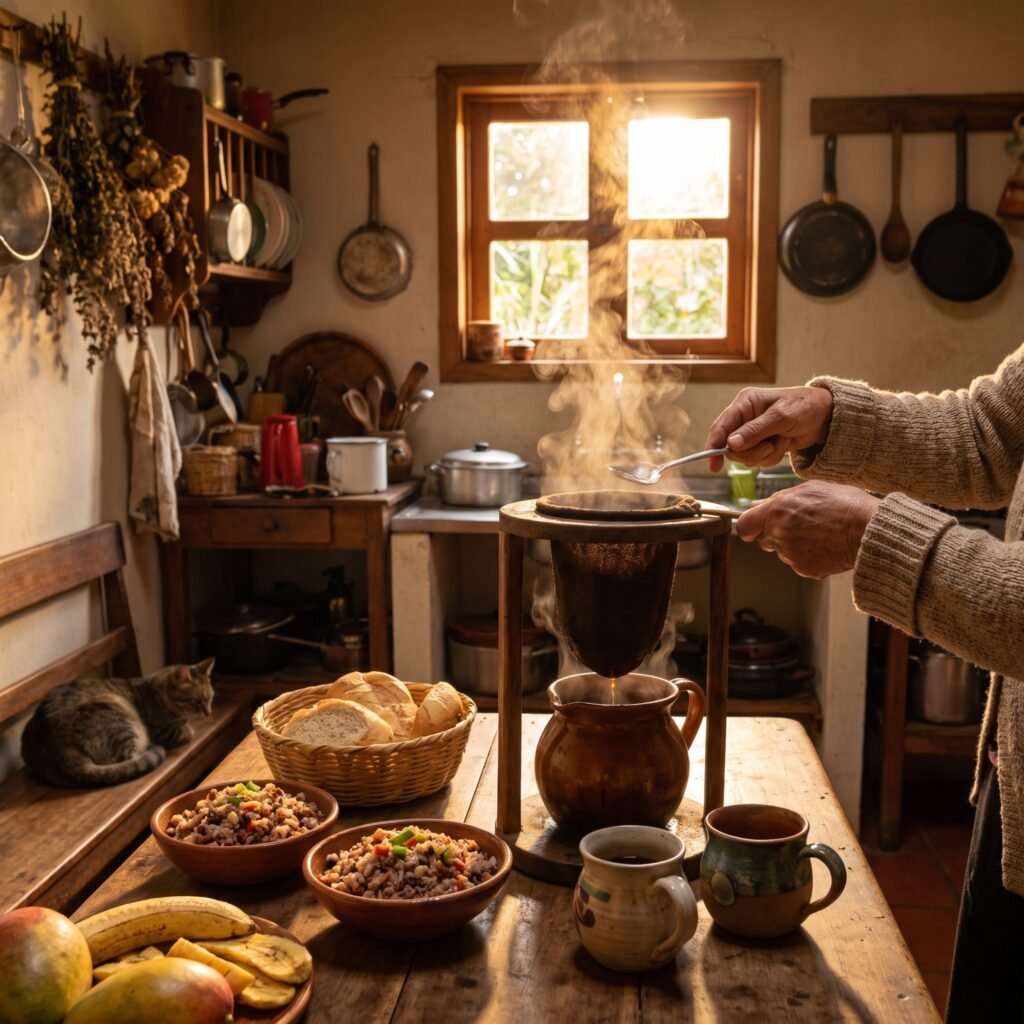
It is not a modern or technological method, but it carries something special: the aroma that fills the kitchen and the slow, deliberate rhythm of preparing coffee by hand.
Even though many homes today also have electric coffee makers, the chorreador remains a very recognizable symbol of Costa Rican coffee culture. In many households, especially when guests arrive, preparing coffee with a chorreador still feels more authentic and personal.
Coffee also plays an important social role. In Costa Rica, offering coffee is almost an automatic gesture of hospitality. If someone visits your home, it is very common to hear the question: “¿Quiere un cafecito?”, “Would you like a little coffee?”
It doesn’t matter if the person is a family member, a neighbor, or even someone visiting for work. Coffee acts as a simple but meaningful gesture of welcome.
Something similar happens in offices and workplaces. In many companies, especially in San José and the Greater Metropolitan Area, there is always a coffee maker somewhere in the office kitchen or common area. Around mid-morning, it is common to see several people gathering there for a quick cup while chatting for a few minutes.
These short moments often break the routine of the workday. Sometimes they lead to casual conversations, shared jokes, or even new ideas. Coffee becomes a small social connector that brings people together, even if only for a few minutes.
But if there is one moment that truly represents Costa Rican coffee culture, it is the afternoon cafecito.
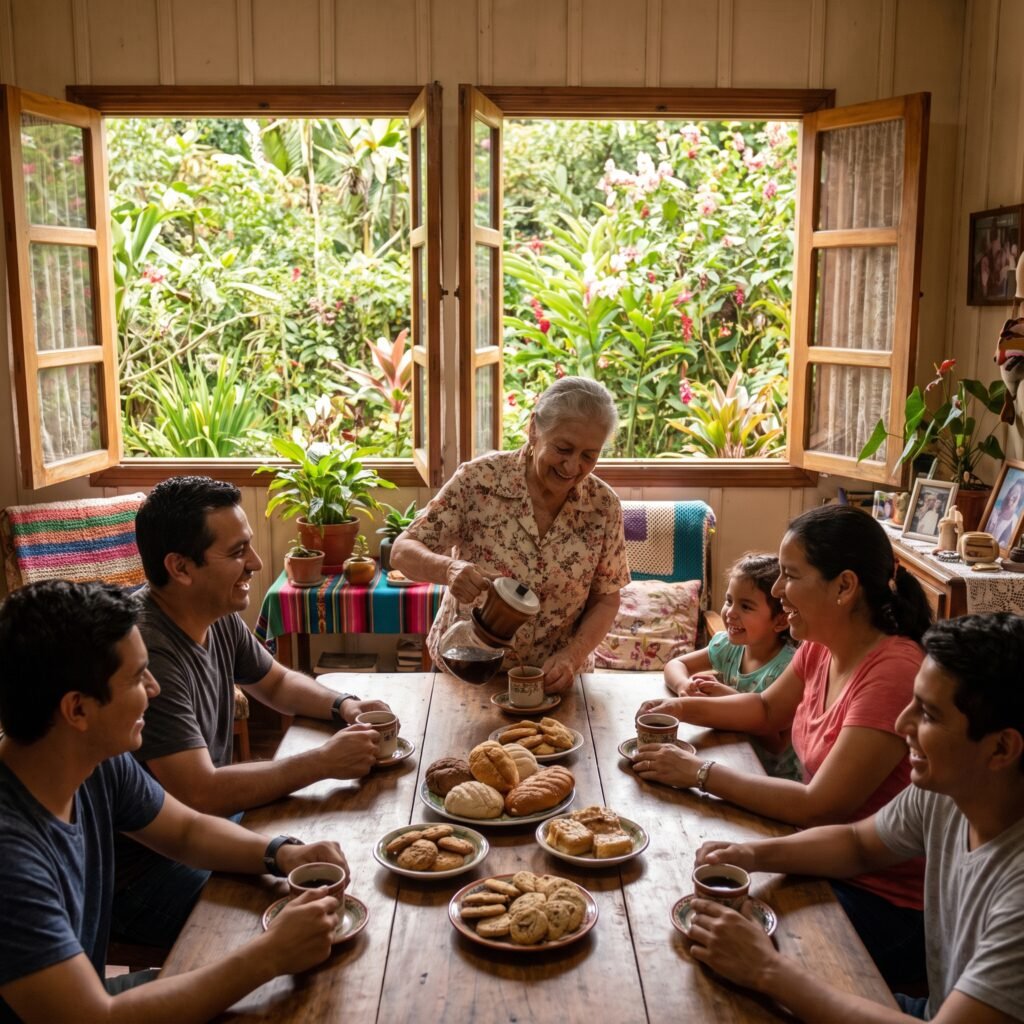
This small ritual usually takes place between three and five in the afternoon. In many homes especially on weekends or when family members are around someone puts on a pot of coffee and brings out sweet bread, cookies, or a slice of cake. It is not a formal meal or a planned event. It simply happens naturally.
That afternoon coffee becomes a time to talk, catch up on the day, or rest for a moment before continuing with daily activities. It is simple, but deeply representative of everyday life in Costa Rica.
Coffee also carries an enormous historical significance in the country. During the nineteenth century, coffee became the economic engine that helped Costa Rica develop. Much of the country’s early infrastructure including roads, railways, and parts of San José’s growth was supported by the export of coffee.
Because of this impact, coffee became known as “the golden bean.”
Even today, coffee remains one of Costa Rica’s most recognized products internationally. Costa Rican coffee is famous for its high quality, largely thanks to the country’s climate, altitude, and volcanic soil.
Regions such as Tarrazú, Naranjo, Tres Ríos, and the Central Valley produce some of the most respected coffees in the world of specialty coffee. These regions are known for balanced flavors, bright acidity, and clean profiles that coffee enthusiasts appreciate.
However, for most Costa Ricans, coffee is not something sophisticated or exclusive. It is everyday, familiar, and accessible.
In recent years, the coffee culture in cities like San José, Escazú, and Heredia has also evolved. Specialty coffee shops have become more common, offering brewing methods like pour-over, Chemex, or French press. These cafés attract both travelers and young professionals who enjoy exploring different flavor profiles of Costa Rican coffee.
Despite this growing specialty scene, the everyday cup of coffee still plays the most important role. The coffee prepared at home, the quick cup at work, or the coffee shared with friends remains the real heart of Costa Rican coffee culture.
Perhaps the most interesting thing about coffee in Costa Rica is that it is not experienced as something extraordinary. People rarely think about it consciously. It is simply part of the daily routine just like greeting someone with pura vida or stopping for a conversation on the sidewalk.
For a visitor, a cup of coffee might seem like just a warm drink. But for many Costa Ricans, coffee represents something deeper. It represents a pause in the day, a moment of connection, a gesture of hospitality, and a tradition passed down through generations.
It is present in quiet mornings, busy offices, family gatherings, and relaxed afternoons. Sometimes it accompanies serious conversations, and sometimes it simply fills the silence of a peaceful moment.
In many ways, coffee acts like a subtle thread that runs through everyday life in Costa Rica.
And in the end, that is what makes coffee so important here. It is not just about what people drink it is about what happens around the cup.
Related Topics
What Is Gallo Pinto and Why Costa Ricans Eat It Every Morning
Why Costa Rica Has One of the Happiest Cultures in the World
What Happens at a Costa Rican Turno? The Town Festival Tourists Never Hear About