
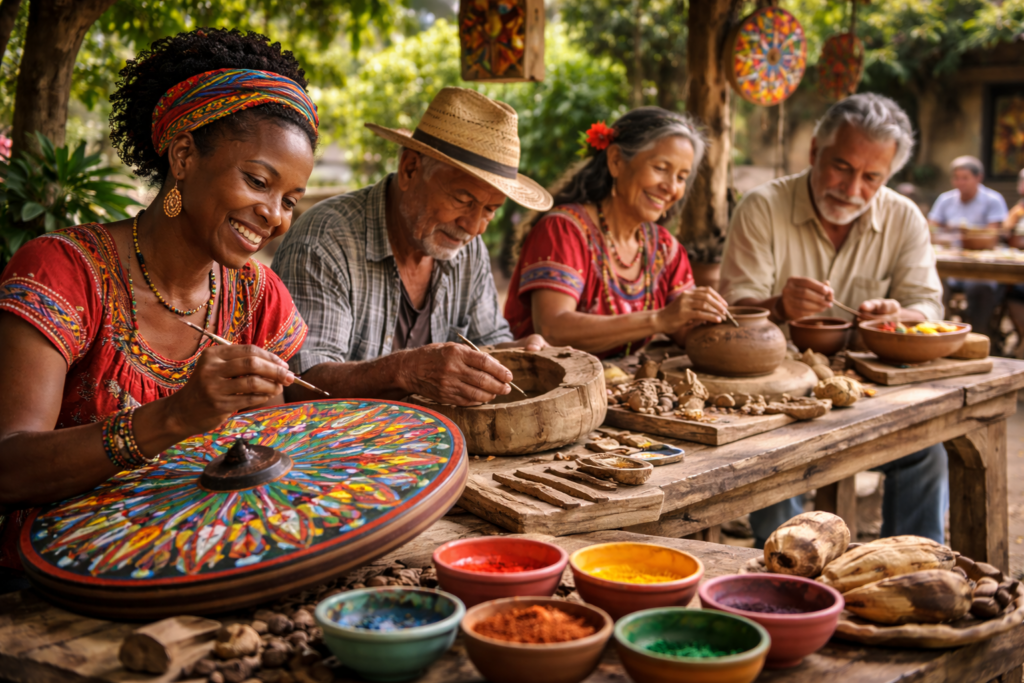
In Costa Rica, tradition lives not only in stories and celebrations, but in the materials people touch every day. Wood polished by generations of hands, clay shaped from local soil, and color drawn from nature itself tell the story of a culture deeply connected to land and memory. Understanding these traditional materials offers a window into Costa Rican identity one rooted in craftsmanship, sustainability, and quiet emotional expression.
Long before modern construction materials and imported décor became common, Costa Rican homes were built with what the land provided. Wood has always been central. In rural communities, especially in Guanacaste and the Central Valley, houses were traditionally constructed from local hardwoods. Teak, cedar, and pochote were valued not only for durability but for their warmth and beauty. Wooden beams, doors, and rocking chairs became symbols of hospitality. To sit in a wooden corredor at sunset, listening to birds and distant conversation, is to experience how material and emotion intertwine.
Woodcarving remains an important artisan tradition. Ox carts, once essential for transporting coffee beans from farms to ports, were handcrafted entirely from wood. Over time, these carts evolved from utilitarian objects into vibrant cultural icons, decorated with intricate geometric patterns and radiant colors. The craft demands patience and emotional discipline; artisans often speak of feeling connected to their ancestors while carving each detail. The process itself reflects a rhythm of care and attention qualities deeply valued in Costa Rican life.
Clay tells a different but equally powerful story. Indigenous communities such as the Chorotega have preserved ceramic traditions that date back centuries. Using techniques passed down orally, artisans shape clay into bowls, plates, and figurines without industrial molds. The earth is gathered locally, mixed with water, and formed by hand. Firing methods are often simple yet effective, using wood-burning kilns that infuse each piece with subtle variations in tone.
The tactile nature of clay encourages mindfulness. When shaping a vessel, the artisan must respond to the material’s texture, moisture, and resistance. This dialogue between hand and earth mirrors the broader Costa Rican relationship with nature collaborative rather than dominating. Traditional pottery often features symbols inspired by animals, plants, and daily life, reflecting respect for the environment and community memory.
Color, meanwhile, adds emotional vibrancy to these materials. From the painted ox carts to handwoven textiles and festival masks, color in Costa Rican tradition is bold and expressive. Reds, blues, oranges, and greens echo the country’s tropical landscapes its flowers, forests, and sunsets. Historically, many pigments were derived from natural sources: crushed seeds, minerals, and plant extracts. Even today, artisans strive to maintain harmony between brightness and authenticity.
Color in Costa Rican craft is not random decoration. It communicates joy, celebration, and belonging. During town festivals, houses are adorned with banners and painted details. In family kitchens, hand-painted plates may hang beside wooden shelves. These everyday touches transform ordinary spaces into emotional landscapes, reinforcing a sense of pride and continuity.
Traditional materials also reflect a sustainable mindset long before sustainability became a global conversation. Using local wood reduces transport and supports community forestry. Clay pottery avoids industrial plastics. Handmade objects last longer because they are made with intention. In rural areas, it is common to repair rather than discard wooden furniture. This culture of care speaks to a broader emotional intelligence embedded in Costa Rican society the understanding that relationships, whether with people or objects, deserve maintenance and respect.
Modern designers in Costa Rica increasingly blend traditional materials with contemporary aesthetics. Boutique hotels incorporate exposed wooden beams and handcrafted ceramics into minimalist spaces. Restaurants serve traditional dishes on locally made clay plates. Even urban apartments often feature a single handcrafted wooden table as a statement of cultural continuity. These choices are not nostalgic gestures; they are affirmations of identity in a rapidly globalizing world.
At its core, the story of wood, clay, and color in Costa Rica is a story of connection. Each material carries traces of the land: the forests that shelter biodiversity, the soil enriched by volcanic history, the natural dyes reflecting tropical abundance. When shaped by human hands, these materials become vessels of memory. They hold the laughter of family meals, the pride of a finished craft, and the quiet satisfaction of work done with care.
To walk through a traditional Costa Rican home is to see how materials shape emotional experience. The creak of a wooden floor, the cool touch of a clay cup, the brightness of painted details these sensory elements create a feeling of warmth and belonging. They remind us that culture is not only expressed in words but embedded in the physical world around us.
Wood, clay, and color are more than resources. In Costa Rica, they are storytellers. They speak of resilience, creativity, and respect for nature. And in their simplicity, they reveal a profound truth: that beauty, when crafted with intention and rooted in place, becomes a living expression of identity.