
Most travelers land in Costa Rica with a list of volcanoes, beaches, and sloths to find. Far fewer arrive knowing how everyday life works here, and that is a shame, because the small customs are what turn a nice trip into a memorable one. I have lived in this country my whole life, and I can tell you that Ticos are patient with visitors. Still, a little preparation goes a long way. Here is what I would tell a friend before they board the plane.
Start With a Proper Greeting
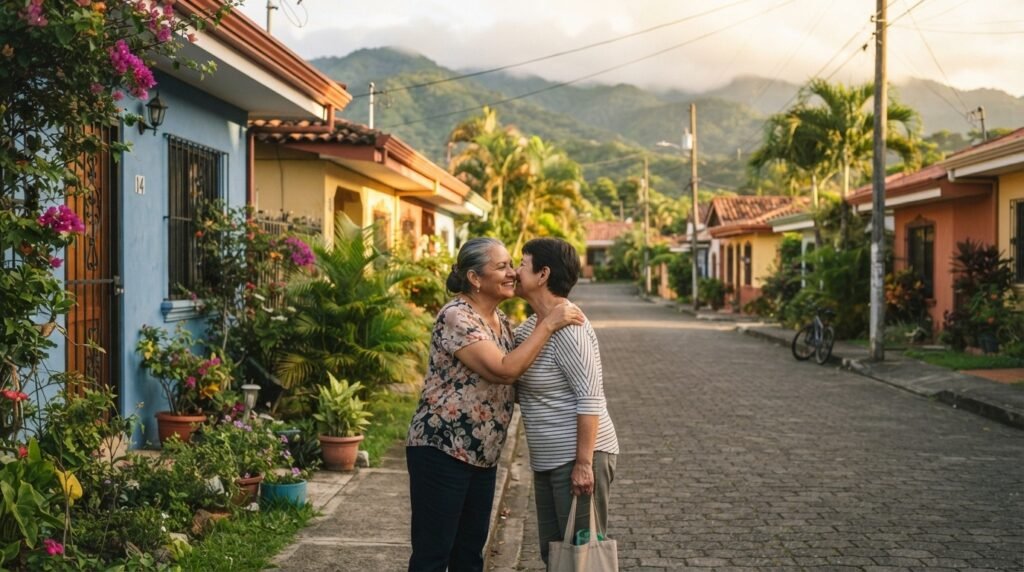
Greetings matter more than you might expect. When you walk into a shop, a small restaurant, or a tour office, say “buenos días” or “buenas tardes” before you ask for anything. Jumping straight to your question can feel abrupt, even when your intentions are perfectly friendly. Among friends and family, a woman greets other women and men with a quick kiss on the right cheek, while men usually shake hands. As a visitor, a handshake and a smile are always safe. Ask “¿cómo está?” and actually wait for the answer, because the question is rarely a formality here. And if someone says “pura vida” to you, say it back. You have just spoken your first full sentence in Tico.
Time Is Flexible, Mostly
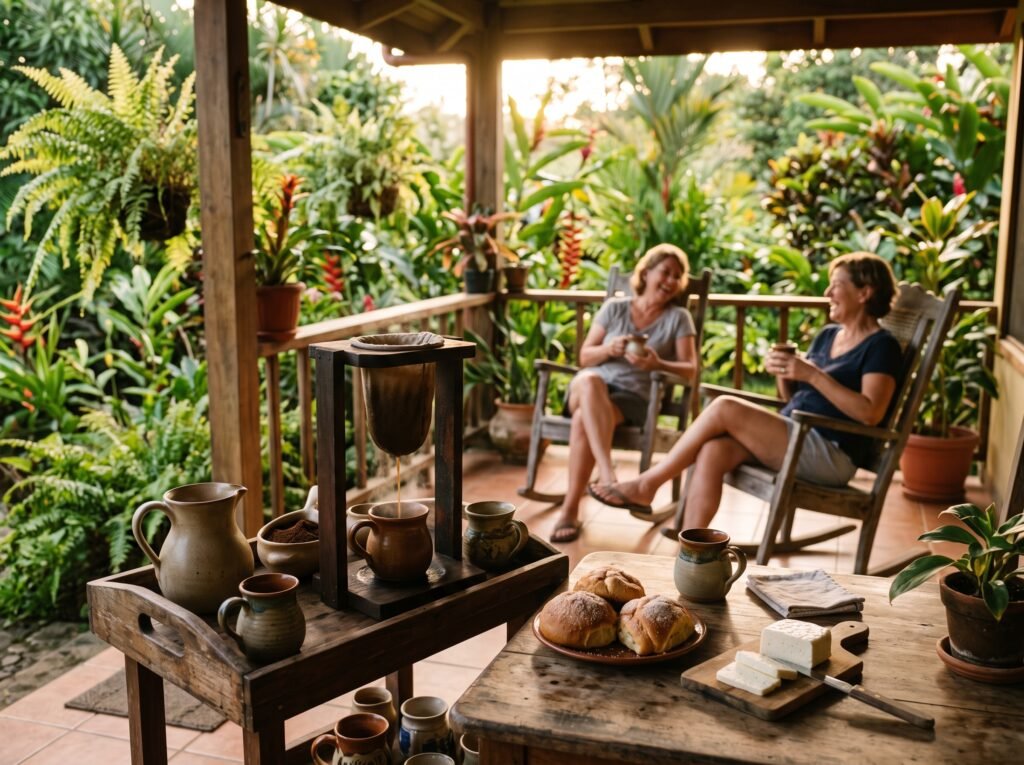
Costa Ricans have a relaxed relationship with the clock, and we even have a name for it: la hora tica. If a friend invites you to dinner at seven, arriving at seven-thirty is normal, and showing up exactly on time may find the host still in the shower. That flexibility belongs to social life, not to everything. Tours, airport shuttles, and long-distance buses run on schedule, so be early for those. Also remember that the sun comes up before six and goes down before six-thirty all year round. Many people go to bed early, and shops open early, so plan your days accordingly.
How Ticos Say No
Costa Ricans tend to avoid conflict, and a blunt “no” can sound harsh to us, so we soften it. If someone answers “ahí vemos” (we’ll see), “ahorita” (right now, which can mean in five minutes or never), or “tal vez” (maybe), they may be politely declining. Do not read this as dishonesty. It is kindness delivered in an indirect package. Directions work the same way: a Tico will rarely admit he does not know the way and may point you somewhere with total confidence. Ask two or three people and compare. Addresses here often use landmarks instead of street names, such as “200 meters north of the old church,” so do not be surprised if your host describes it that way. A navigation app helps a great deal.
Money, Tips, and Prices
Money is simpler than people expect. By law, restaurants add a 13 percent sales tax and a 10 percent service charge to the bill, so a tip is already included. Leaving a few extra dollars for outstanding service is appreciated but never required. Colones and U.S. dollars are both accepted in tourist areas, yet your change usually comes back in colones, and small local businesses prefer them, so keep some cash on hand. Bargaining is not part of everyday shopping. Prices in stores and supermarkets are fixed, and haggling is mostly limited to craft markets, where a friendly, gentle approach works better than a hard push.
At the Table
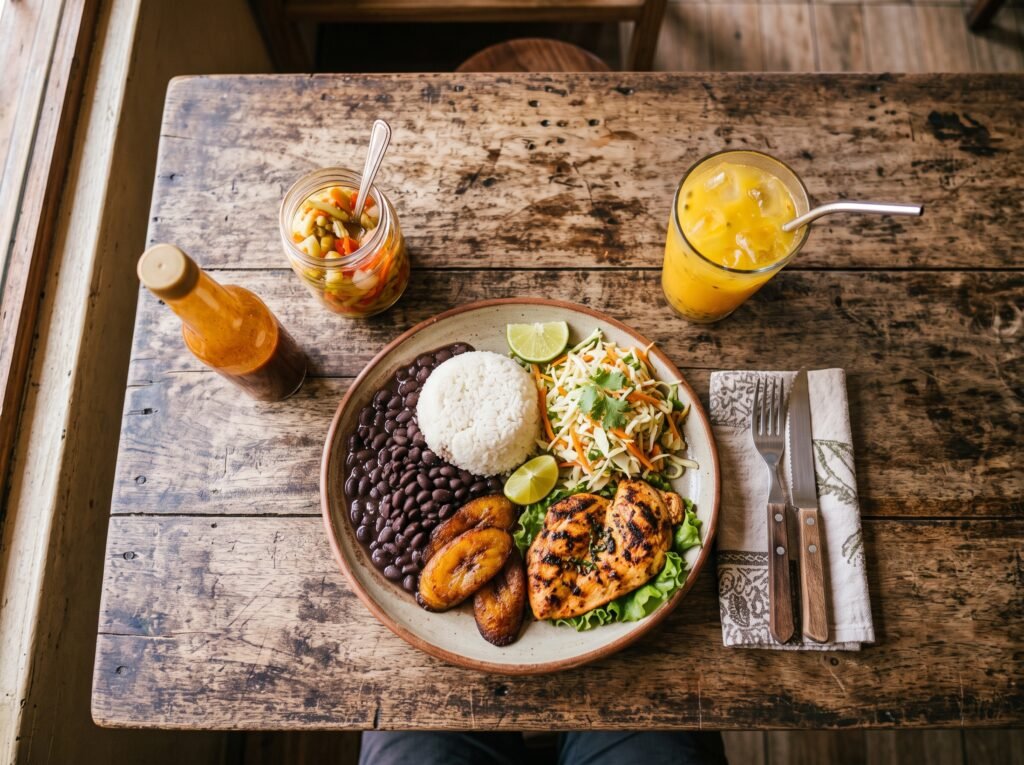
Food is where you will feel our hospitality most. Costa Rican cooking is mild rather than spicy, so do not expect chili heat. Most tables hold a bottle of Salsa Lizano and a jar of pickled vegetables called chilero, and you add what you like. If someone invites you into their home, bring something small, such as pastries, dessert, or a bottle of wine, and expect to be fed more than you can finish. Turning down a second helping once is polite; accepting it is the real compliment. At restaurants, the bill will not arrive until you ask for it, because rushing a guest out feels rude. Just say “la cuenta, por favor,” and wait with a coffee in hand.
Little Details That Surprise Newcomers
A few everyday details tend to surprise first-time visitors. In many buildings, especially older ones, the plumbing is narrow, so used toilet paper goes into the bin beside the toilet rather than into it. Look for a sign or a small basket. Tap water is safe to drink in most of the country, though in remote areas it is wise to ask first. Swimwear belongs at the beach and the pool; walking through a town center in a bikini or without a shirt looks out of place. Smoking is prohibited in enclosed public spaces. Finally, if you travel during Holy Week, know that the dry law bans alcohol sales on Holy Thursday and Good Friday, and many businesses close for those days.
One Last Thing
None of this is a test. Ticos are generous with foreigners who make an effort, and a mispronounced “gracias” earns more warmth than perfect silence. Greet people, slow down a little, and let your plans bend when life asks them to. Do that, and you will experience Costa Rica the way we do, as a place that rewards patience and curiosity. Come for the volcanoes if you like, but stay long enough to share a coffee with someone. That is usually where the best part of the trip happens.