
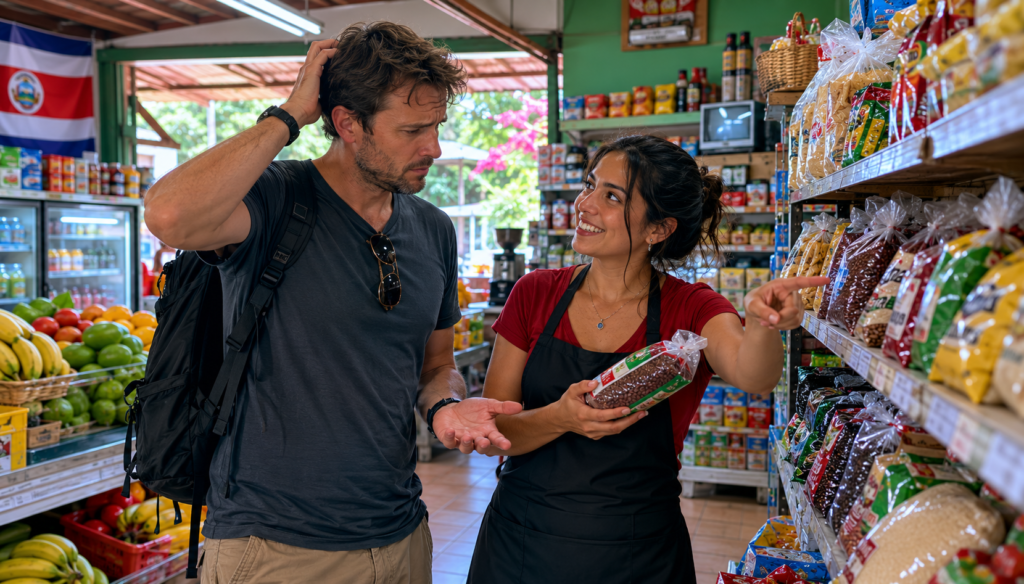
Strange is a word that says more about the observer than the observed. When Americans describe something in Costa Rica as strange, they are usually not making a judgment about quality; they are registering the gap between what they expected and what they encountered, and that gap is the most honest data point available about how two cultures actually differ.
I have spent years watching Americans hit that gap, sometimes with a laugh, sometimes with visible confusion, occasionally with the kind of frustration that comes from genuinely not understanding what just happened. The moments that produce this reaction are remarkably consistent, which tells you something important; they are not random quirks, they are structural features of a different cultural logic, and once explained, they stop being strange and start being interesting.
I am Costa Rican, thirty-five years old, and I have worked alongside Americans, hosted them in my home, watched them date my cousins, and answered their confused questions at family gatherings more times than I can count. This article collects the moments that surprise them most consistently, and explains, without defensiveness and without apology, what is actually going on underneath each one.
None of what follows is meant as criticism of American culture or Costa Rican culture. It is meant as translation, the kind that makes both sides slightly less foreign to each other.
Read it before your trip, or read it after, when the strangeness has already happened to you and you finally want to know why.
There is a particular facial expression that I have learned to recognize instantly, a combination of a raised eyebrow, a slight pause in the middle of a sentence, and a quick glance toward me as if checking whether what just happened was actually normal. I have seen it on the faces of American coworkers, American friends, American family members who married into Costa Rican families, and American tourists I have never met before and will never see again. It is the face of someone encountering, for the first time, one of the dozens of small cultural moments that Costa Rica produces with total consistency and zero explanation. What follows is my attempt to finally provide that explanation, moment by moment, for everything that reliably produces that face.
The check that never comes unless you ask for it
This is almost always the first one. An American finishes a meal at a soda or restaurant, waits for the bill, and watches nothing happen. The waiter passes by, smiles, refills the water, and moves on. Ten minutes pass. The American begins to wonder if something is wrong. Nothing is wrong; in Costa Rica, bringing the check unsolicited is considered presumptuous, almost like rushing the guest out the door. The table belongs to you for as long as you want it, and the moment you decide otherwise is the moment you signal it, usually by saying “la cuenta, por favor.” Once Americans learn this, most of them describe it as one of the most pleasant adjustments of their entire trip.
Calling close friends and even toddlers “usted”
Every American who studied Spanish learned that “usted” is the formal pronoun, reserved for strangers and elders. Then they hear two college-age friends calling each other “usted” while arguing about football, or a mother calling her three-year-old “usted” with obvious tenderness, and the grammar they learned stops making sense. In Costa Rica, usted has been culturally repurposed; it signals warmth and attention rather than distance, and once that shift clicks into place, it stops sounding stiff and starts sounding, correctly, like affection.
A confirmed plan that isn’t actually confirmed
An American makes plans with a Costa Rican friend for Saturday at three, hears an enthusiastic yes, and shows up at three expecting the friend to be there. The friend arrives at four fifteen, completely unbothered, with no apology and no sense that anything unusual occurred. This produces real frustration in Americans before it produces understanding. The understanding, once it arrives, is that Costa Rican plans are made with genuine intention but held loosely, prioritizing the quality of the eventual encounter over the precision of its timing. The fix, most Americans eventually learn, is simply to build in the buffer and stop taking it personally.
“The things Americans find strange about Costa Rica are rarely about quality. They are about a different logic for how time, warmth, and honesty are supposed to work, and that logic, once explained, usually earns more respect than confusion.”
Saying yes when the real answer is no
An American asks a direct question, gets an enthusiastic yes, and later discovers the thing never happened and was never actually going to happen. This pattern, repeated enough times, produces genuine bewilderment. What is actually occurring is Costa Rica’s deep cultural aversion to direct refusal; saying no to someone’s face, in the moment, feels like inflicting an unnecessary wound, so the culture has developed an entire vocabulary of soft deflection, “ahorita,” “vamos a ver,” “tal vez,” that functions as a gentle no without ever using the word. Americans who learn to hear the deflection underneath the words stop feeling deceived and start reading the room more accurately.
Addresses that describe a tree instead of a street number
An American asks for an address and receives something like, from the old bakery, two hundred meters north, then fifty meters east, the house with the blue gate. This sounds like a joke until the American realizes it is the actual legal address, used on official documents, because Costa Rica’s addressing system has historically been landmark based rather than numerical. GPS has eased this considerably, but the underlying logic, reading the landscape instead of the signage, is still alive and still occasionally produces real bewilderment in anyone who grew up trusting a postal code.
Coffee that you are simply expected to accept
An American visiting a Costa Rican home is offered coffee almost immediately, and if they decline politely the way they would at home, they notice a small, almost invisible change in the room’s warmth. Offering coffee in Costa Rica is an act of welcome, not a transaction, and refusing it briskly declines the welcome along with the beverage. Most Americans figure this out by the second or third visit, and the ones who do report a noticeably warmer reception afterward.
Public affection between family members of every age
An American watches a forty-year-old man embrace his mother in the middle of a grocery store with complete unselfconsciousness, or sees grown siblings hold hands while crossing a street, and registers something that feels both touching and slightly disorienting. American culture maintains a careful calibration of public physical affection, particularly past a certain age; Costa Rican culture does not apply that same restraint, because the family is considered too important to confine its expressions of love to private space.
Nicknames based entirely on physical appearance
An American hears a friend’s uncle called “Gordo,” a cousin called “Flaco,” a neighbor called “Chino,” and assumes, reasonably by American standards, that these are insults. They are not. In Costa Rica, nicknames derived from physical traits are usually terms of genuine affection, used by people who like each other enough to notice and name those traits without cruelty. Americans who understand this stop flinching and start recognizing the warmth underneath the label.
Goodbyes that take twenty minutes and involve everyone in the room
An American tries to leave a gathering with a general wave toward the room, the way they would at home, and discovers that this does not register as a goodbye at all. In Costa Rica, leaving requires saying goodbye individually to every person present, with eye contact and often a handshake or cheek kiss, the same way arriving required greeting everyone individually. A twelve person gathering can take twenty minutes to exit. It is not inefficiency; it is care, distributed person by person.
What the strangeness actually reveals
Looked at together, almost everything on this list points in the same direction; Costa Rican culture consistently prioritizes the quality of human connection over the efficiency of the transaction containing it. The check that does not come, the plan that bends, the goodbye that takes twenty minutes, the coffee you are expected to accept, all of these slow things down in service of treating the person in front of you as more important than the schedule behind you.
Americans who stop finding these moments strange and start finding them instructive tend to have the best experiences in Costa Rica, and often the most lasting ones. The strangeness was never a flaw in the culture. It was a signal that two different systems for organizing daily human life had just made contact, and that contact, once understood, is where the real value of travel actually lives.